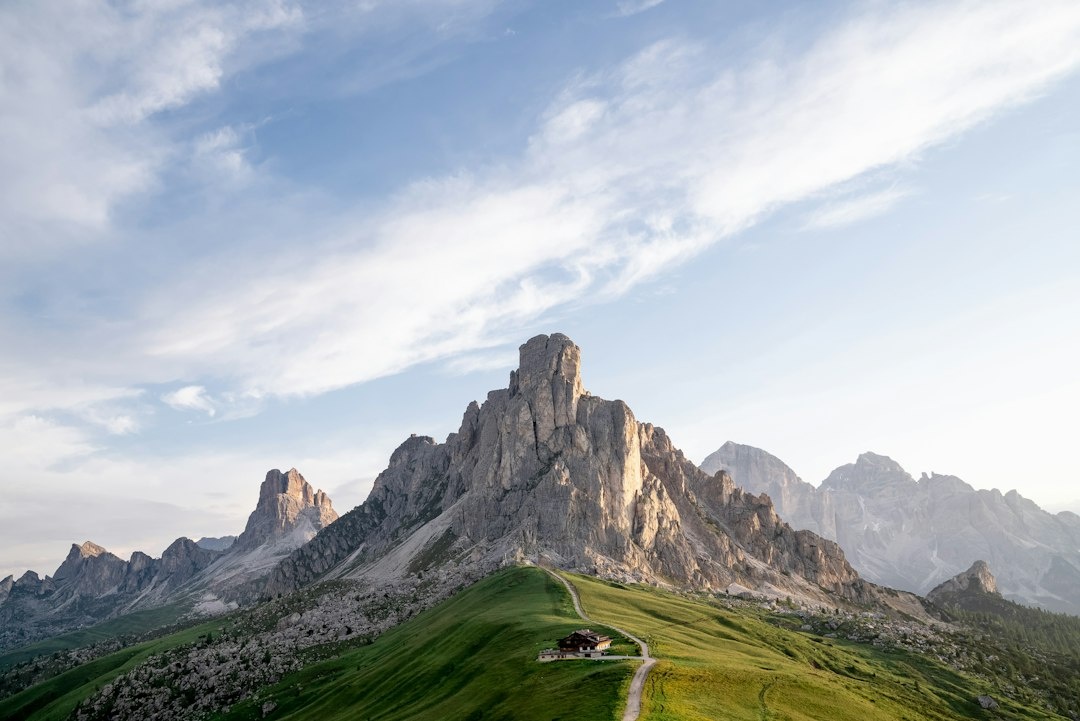
The Dolomites are never truly empty, but October gives you a fighting chance: larch forests turn copper, summer tour groups thin out, and sunrise arrives around 7:20–7:35 a.m. The catch is that golden hour often falls outside cable-car schedules, so photographing Seceda, Alpe di Siusi, Passo Giau, and Tre Cime without a crowd requires early hiking, strategic accommodation, and at least one weather-flex day.
Key Takeaways
- Allow five nights: two around Ortisei and three around Cortina d’Ampezzo, with one movable weather day.
- October sunrise is roughly 7:10–7:45 a.m., while most lifts start at 8:00–8:30 a.m.—too late for dawn photography.
- Budget approximately €1,450–€1,700 per person for five nights with a rental car, excluding flights.
- The quietest windows are weekday dawn at Seceda and Alpe di Siusi, plus the final 45 minutes before dusk at Passo Giau.
- Tre Cime’s toll road costs about €40 per car in October 2026, but snow can close it with little notice.
Key Numbers at a Glance
| Location | Best light | Approach | Hiking time | October 2026 cost |
|---|---|---|---|---|
| Seceda | Sunrise | Daunëi trailhead | 2.5–3 hours up | Free hike; lift return about €52 |
| Alpe di Siusi | Sunrise | Compatsch to Belvedere area | 60–75 minutes each way | Parking about €28/day; cable return about €30 |
| Passo Giau | Sunset | Roadside pass | 5–35 minutes | Free roadside parking |
| Tre Cime | Sunset or sunrise | Rifugio Auronzo toll road | 45–90 minutes to key viewpoints | About €40/car |
| Full route | Five shooting sessions | Ortisei to Cortina | Approximately 25 km on foot | €1,450–€1,700 solo |
Prices are planning figures checked for October 2026. Mountain operators can shorten schedules or close roads because of snow, wind, or maintenance; confirm again 24 hours before each shoot.
First, Choose the Right Version of This Route
This itinerary is designed for an experienced solo traveler who can hike on marked mountain paths in darkness. It is not a “step out of the cable car and photograph sunrise” trip, because October lifts generally begin at least 45 minutes after sunrise.
- Choose the hiking-first route if you can climb 800–1,000 vertical meters before dawn and carry a tripod, water, insulation, and traction.
- Choose the comfort-first route if you will pay €220–€450 per night for a plateau or mountain hotel that removes most of the dark approach.
- Choose sunset over sunrise if overnight temperatures fall below freezing or paths become icy; navigation is easier in daylight, though the descent will be dark.
- Choose Passo Giau when the high lifts close. It offers the best photographic return for less than 30 minutes of walking.
- Choose Tre Cime only with a stable forecast; its exposed paths are a poor place to improvise in fog, wind, or early snow.
If you are uncomfortable with solo night hiking, book a local mountain guide through Guide Alpine Cortina or Catores Val Gardena. Expect roughly €280–€420 for a private half-day, compared with zero guiding cost but substantially greater risk alone.
The Best October Timing—and Why Mid-Month Wins
Aim for October 5–18. You are late enough for yellow larches and quieter trails but early enough to have a realistic chance of open mountain roads, operating lifts, and staffed restaurants.
By the final week of October, daylight is shorter and solitude improves, but the operational margin collapses. A clear October 12 may feel like autumn at 1,500 meters and winter at 2,500 meters; a storm can drop 15 centimeters of snow overnight while Ortisei remains merely wet.
| Date | Approx. sunrise | Approx. sunset | Useful implication |
|---|---|---|---|
| October 5 | 7:15 a.m. | 6:44 p.m. | More evening time, but higher visitor numbers |
| October 15 | 7:28 a.m. | 6:26 p.m. | Best compromise for foliage and access |
| October 25 | 7:42 a.m. | 6:09 p.m. | Quieter, colder, and more closure-prone |
Golden hour begins about 35–45 minutes before sunrise and before sunset, but the most dramatic alpenglow may last only five minutes. Arrive 45 minutes early rather than chasing the color after it begins.
October 2026 Cable Cars, Roads, and the Scheduling Trap
Use cable cars for daytime scouting, not for reaching October sunrise. Seceda’s first uplift is normally around 8:30 a.m., while the Alpe di Siusi aerial cableway generally starts at 8:00 a.m.; both miss the best dawn light by a wide margin.
| Transport | Typical October 2026 schedule | Adult price | What it means for photographers |
|---|---|---|---|
| Ortisei–Furnes–Seceda | About 8:30 a.m.–5:30 p.m. | Approx. €39 one way / €52 return | Good for scouting; unusable for sunrise and usually too early to return after sunset |
| Siusi–Alpe di Siusi cable car | About 8:00 a.m.–6:00 p.m. | Approx. €20 one way / €30 return | Useful for daytime access, not dawn |
| Alpe di Siusi road | Private uphill traffic restricted roughly 9:00 a.m.–5:00 p.m. | Compatsch parking about €28/day | Drive up before dawn and do not descend during the restricted window without checking signs |
| Tre Cime toll road | Usually daylight operation, weather-dependent | Approx. €40/car | Online booking may be required; opening can be delayed by ice |
| Tre Cime seasonal bus | Limited or discontinued by mid/late October | About €20 return | Cheaper than driving, but poor for golden-hour timing |
Check Seceda operations at seceda.it, Alpe di Siusi access at seiseralm.it, and Tre Cime road status through Auronzo tourism. The lift may be advertised as open through early November yet still stop for high wind on your chosen morning.
The Five-Night Route: Ortisei to Cortina
Arrival Day: Base Yourself in Ortisei and Scout Seceda
Spend the first two nights in Ortisei rather than Bolzano. Bolzano rooms can be €40–€80 cheaper, but the 36-kilometer drive takes about an hour each way and destroys the advantage of a 4:15 a.m. start.
Search for hotels in Ortisei with parking and breakfast available after 9:00 a.m. Hotel Angelo Engel is the comfortable choice at roughly €260–€380 per room, while Garni August is a more practical photographer’s base at approximately €130–€190.
On arrival, ride the Seceda cable car for a daytime reconnaissance if it is operating. A €52 return ticket is expensive compared with hiking for free, but seeing the ridge in daylight is worth more than trying to locate cliff edges for the first time under a headlamp.
For dinner, book Tubladel and order the venison or spinach spätzle; mains run about €22–€34. Skip generic pizza on the pedestrian street and eat a substantial mountain meal—you will burn considerably more energy than on a normal sightseeing day.
Day 1: Seceda Sunrise Without the Cable Car
The famous Seceda ridgeline points northeast, making dawn more reliable than sunset for texture and side light. It is also the hardest “alone” shoot on this itinerary because reaching it before sunrise requires a substantial ascent.
Drive from Ortisei to the Daunëi area above Santa Cristina, approximately 10 kilometers and 20 minutes. Parking rules change seasonally, so use an explicitly marked public space and never block farm access; if the upper spaces are restricted, start lower and add 20–30 minutes.
- Start between 4:10 and 4:30 a.m. for a mid-October sunrise.
- Follow signs toward Rifugio Firenze, then Seceda on established paths.
- Allow 2.5–3 hours for roughly 5.5–6.5 kilometers and 850–1,000 meters of ascent.
- Set up below the main summit station, keeping well back from the cliff and fenced drop-offs.
- Wait 20 minutes after sunrise; tour photographers often leave after the first burst of color.
The obvious tripod position is the paved summit viewpoint, but it produces the same compressed composition everyone has. Walk 150–250 meters west along the safe side of the ridge and use a 35–70mm focal length to layer the Odle peaks; it is usually quieter than the wide-angle platform.
A 24–70mm lens is more useful here than an ultra-wide. At 16mm, the Odle teeth become tiny; at 50mm, they dominate the frame and the ridgeline becomes a clean leading line.
Descending takes approximately two hours, versus 15 minutes by cable car once operations begin. If your knees object to 1,000 meters of descent, wait for the lift and buy a one-way ticket, but confirm that the upper station is actually running before relying on it.
Safety cutoff: abandon the summit if the ridge is iced, wind exceeds roughly 40 km/h, or visibility falls below 100 meters. Seceda’s grassy slopes look gentle in photographs, but the north side contains serious cliffs.
Day 2: Alpe di Siusi Sunrise, Then Transfer to Cortina
Leave Ortisei around 5:15 a.m. and drive 23 kilometers to Compatsch in roughly 35–40 minutes. The alternative cable car from Siusi costs about €30 return but begins around 8:00 a.m., nearly an hour after the decisive light.
Enter the plateau road before its daytime traffic restriction begins and park only in an authorized Compatsch lot. Expect around €28 for the day; that is expensive next to free valley parking, but it buys legal predawn access and saves about 700 vertical meters.
From Compatsch, walk toward the Hotel Icaro and Belvedere meadow area. The strongest compositions are approximately 4–5 kilometers from the main parking zone, requiring 60–75 minutes on foot or 20–30 minutes by e-bike.
Do not place your tripod in the middle of the famous farm road. Set up on a durable roadside verge, keep gates clear, and frame Sassolungo with a 50–85mm lens; the longer focal length removes empty foreground and makes the mountain appear more imposing.
Best quiet tactic: continue 10 minutes beyond the first obvious cluster of tripods. Most visitors stop at the first unobstructed view, while nearly identical angles farther east can be empty.
After breakfast, drive from Compatsch to Cortina d’Ampezzo via Passo Gardena and Arabba if roads are dry: roughly 105 kilometers and 2 hours 30 minutes without stops. The faster-looking mountain route can become slower than the 145-kilometer valley alternative when fog or roadworks reduce speeds.
If you have spare daylight, stop at Passo Falzarego rather than squeezing in another major hike. It gives you a low-commitment weather check and is only about 25 minutes from Cortina.
Day 3: Passo Giau Sunset—the Best Low-Effort Shoot
Passo Giau is the route’s highest reward-to-effort location. From central Cortina, the drive is approximately 17 kilometers and 30–35 minutes, compared with three hours of hiking for Seceda.
Arrive 90 minutes before sunset because the small roadside pull-offs fill quickly on clear evenings. Parking is generally free, but never leave the car partly on the road; autumn frost and blind bends make that dangerous.
There are three worthwhile tripod zones:
- Ra Gusela roadside view: A 5–10-minute walk, ideal with a 24–70mm lens and changing clouds.
- Small chapel near the pass: Best with a 35–50mm lens, using the building as foreground rather than making it the subject.
- Path toward Forcella Giau: Walk 25–35 minutes for cleaner foreground and fewer parked cars.
Skip the cramped mound immediately beside the main parking area. Walk even 400 meters away and the sound of doors, engines, and roadside conversations drops sharply.
The sun sets west of the pass, while Ra Gusela and surrounding peaks can catch reflected pink light after the solar disk disappears. Stay another 15 minutes instead of packing when the sun touches the horizon.
Eat afterward at Al Camin in Cortina, where pasta dishes are around €18–€24 and meat mains approximately €28–€38. It is better value and less performative than the celebrity-facing venues around Corso Italia.
Day 4: Tre Cime—Choose Sunrise or Sunset Carefully
Tre Cime is not one viewpoint but a high plateau with multiple faces. Sunrise works around Forcella Lavaredo and the eastern flanks; the classic north-face view near Locatelli is usually more satisfying in late-afternoon light.
If the toll road is open, drive about 40 kilometers from Cortina to Rifugio Auronzo in 50–60 minutes. In October 2026, plan on approximately €40 per car and an advance reservation where required; the gate may open too late for sunrise after a freezing night.
For a true dawn arrival without sleeping at Rifugio Auronzo, park legally near Lago d’Antorno and hike approximately 5.5–6 kilometers uphill. Allow two hours and around 500 meters of elevation gain, compared with a 15-minute drive from the toll gate when the road is open.
The more sensible solo plan is a late-afternoon shoot:
- Park at Rifugio Auronzo at least four hours before sunset.
- Walk Trail 101 past Rifugio Lavaredo, approximately 1.7 kilometers in 30–40 minutes.
- Continue to Forcella Lavaredo, adding about 20 minutes.
- For the classic north faces, continue toward the Locatelli/Dreizinnenhütte area; allow 75–90 minutes from Auronzo in total.
- Leave enough time for a 60–90-minute headlamp return, depending on your exact tripod position.
The saddle at Forcella Lavaredo is safer and quicker than committing to Locatelli when frost is forming. You sacrifice the textbook north-face alignment, but cut the dark return roughly in half.
Rifugio Auronzo, Lavaredo, and Locatelli commonly close for the season before or during October. Carry dinner, one liter of water, and an emergency layer instead of assuming a hut will be serving food.
Day 5: Hold This Day for Weather—Do Not Pre-Book Every Shoot
Your fifth day is not empty; it is insurance. Move the least successful shoot here based on cloud base, wind, and road status.
If Seceda was fogged in, repeat Passo Giau rather than forcing another 1,000-meter predawn climb. If Tre Cime’s road was shut by snow, photograph Lago di Misurina at dawn, only about 15 kilometers from Cortina and requiring almost no hiking.
For low cloud, try Val Fiscalina near Sesto. The valley trail sits below the highest summits, so autumn forest and waterfall details can work even when Tre Cime is invisible; a full valley walk is about 8–10 kilometers versus the exposed Tre Cime circuit’s roughly 10 kilometers.
Weather Backup Plan: What to Shoot When the Peaks Disappear
October weather is frequently more interesting than a cloudless forecast, but only if the cloud ceiling remains above the subject. Use Windy for cloud-base layers, Meteoblue for multi-model comparison, and 3B Meteo for localized Italian forecasts.
| Conditions | Best substitute | Why it works |
|---|---|---|
| High cloud, clear horizon | Passo Giau | Potential for strong sunset color with minimal hiking |
| Low cloud below 2,200 m | Val Fiscalina or Lago di Dobbiaco | Forest, reflections, and detail shots do not require visible summits |
| Strong wind above 40 km/h | Misurina shoreline | Lower exposure and fast retreat to the car |
| Fresh snow or black ice | Cortina and lower Falzarego viewpoints | Avoids committing to steep, shaded paths |
| Continuous rain | Museum Gherdëina or Cortina cafés | Use the day to back up files and move the shoot |
Do not treat rain as an automatic failure. Wet larches, fog layers, and brief breaks often create better images than blue skies; continuous wind-driven sleet is different and should trigger a retreat.
October conditions also resemble shoulder-season trekking elsewhere in the Alps. If you are extending east, this case study of Slovenia’s Seven Lakes Valley offers a useful comparison for mountain distances, weather margins, and family-friendly pacing.
Camera Gear and Travel Tech That Actually Earn Their Weight
Carry one camera body, a 24–70mm lens, and either a 70–200mm or lightweight telephoto. A second body sounds efficient, but adding 1–1.5 kilograms is noticeable during Seceda’s 900-meter climb.
- A stable carbon tripod weighing 1.2–1.8 kilograms
- Two spare batteries kept inside your jacket
- Lens cloths and a small rain cover
- Headlamp producing at least 300 lumens, plus a backup light
- Offline maps in Komoot, Outdooractive, or Mapy.com
- Microspikes when overnight temperatures approach 0°C
- 10,000–20,000mAh power bank and short charging cable
- Whistle, emergency blanket, and basic first-aid kit
PhotoPills is best for precise sun alignment and costs roughly €11 as a one-time purchase, while Sun Surveyor offers similar planning tools at around €8–€10 depending on platform. Google Maps is adequate for driving, but it is not a substitute for an offline topographic map on the Seceda approach.
Download map tiles and cable-car confirmations before leaving town. Mobile coverage is usually decent on exposed ridges but can disappear behind saddles; an offline route is more valuable than switching between multiple eSIMs.
For exposure, bracket three frames at ±2 EV only when the contrast demands it. Wind-blown grass, moving clouds, and people can make seven-frame HDR sequences harder to merge than a single carefully exposed RAW file.
Where to Stay and Eat Along the Route
Use two bases rather than changing hotels every night. Two nights in Ortisei and three in Cortina produce one 2.5-hour transfer, while sleeping beside every viewpoint can mean four check-ins and more than €100 in added cleaning or short-stay premiums.
| Base | Recommended stay | Typical October rate | Best for |
|---|---|---|---|
| Ortisei | Garni August | €130–€190/night | Parking and practical access to Seceda |
| Ortisei | Hotel Angelo Engel | €260–€380/night | Comfort, spa recovery, central dining |
| Alpe di Siusi | Hotel Icaro | €280–€450/night | Walk-out sunrise access |
| Cortina | Hotel da Beppe Sello | €140–€220/night | Parking and straightforward road access |
| Cortina | Franceschi Park Hotel | €180–€300/night | Central location with more comfort |
If your priority is Alpe di Siusi alone at dawn, one night at Hotel Icaro is worth more than a premium room in Ortisei. You can walk directly into the meadows, whereas a valley hotel requires a 40-minute drive, parking fees, and a one-hour approach.
In Cortina, reserve Al Camin for a proper dinner and use Panificio Alverà for early provisions. A bakery sandwich and pastry cost around €8–€12, compared with €25–€35 for lunch at a mountain refuge—if the refuge is open at all.
Costed Five-Night Solo Budget
This is not a bargain route, largely because a car and single-occupancy rooms are difficult to avoid. Two photographers sharing a room and vehicle can reduce the per-person total by roughly €450–€600.
| Expense | Solo cost | Notes |
|---|---|---|
| Five hotel nights | €750 | Two Ortisei, three Cortina at an average €150 |
| Rental car, six days | €390 | About €65/day with basic coverage |
| Fuel | €75 | Approximately 500–600 km of driving |
| Seceda scouting lift | €52 | Optional return ticket |
| Alpe di Siusi parking | €28 | Approximate full-day rate |
| Tre Cime toll road | €40 | Passenger car |
| Other parking | €25 | Cortina and trailheads |
| Food | €240 | About €40/day using bakery lunches |
| Apps and contingency | €35 | Photo app, snacks, minor gear replacement |
| Total | €1,635 | Approximately $1,765 at €1 = $1.08 |
A comfort version with Hotel Icaro and upscale dinners approaches €2,300. A shared-car, shared-room version can fall near €1,050 per person, but cutting the weather day is false economy when one storm can erase half the planned locations.
Common Mistakes That Ruin October Dolomites Shoots
Assuming the Cable Car Reaches Sunrise
It does not. An 8:30 a.m. Seceda opening can be more than an hour after sunrise, so choose a dark hike or accept daytime light.
Planning Seceda and Tre Cime on Consecutive Mornings
Both can involve two-hour predawn approaches. Put the low-effort Passo Giau session between them rather than stacking two sleep-deprived mountain hikes.
Parking Wherever Other Cars Are Parked
A line of vehicles does not make a farm entrance legal. Italian mountain municipalities enforce seasonal restrictions, and towing costs far more than a €20–€30 official lot.
Depending on Open Huts for Food or Shelter
Many refuges close from late September to mid-October. An unlocked winter room cannot be assumed, and a website listing does not guarantee staffed operation after early snow.
Ignoring Frost on the Descent
A dry afternoon path can glaze over after sunset, especially on north-facing sections near Tre Cime. Microspikes weighing 300–450 grams are a better compromise than carrying full winter hardware “just in case.”
Using Only an Ultra-Wide Lens
The Dolomites often look stronger at 50–135mm. Wide lenses exaggerate empty meadow and shrink the peaks; use them only when foreground genuinely contributes to the image.
Trying to Guarantee Solitude
No public viewpoint can be reserved. The realistic goal is visual solitude: move 200 meters from the obvious pin, shoot on Tuesday rather than Saturday, and use longer focal lengths to exclude other visitors.
Final Verdict: The Best Order for Light, Safety, and Solitude
Photograph Seceda first while your legs are fresh, use Alpe di Siusi as the gentler second dawn, then transfer east. Shoot Passo Giau at sunset and save Tre Cime for the clearest, least windy day.
If only two locations have good weather, prioritize Seceda for its unmistakable ridgeline and Passo Giau for its flexibility. Tre Cime may be more famous, but a closed toll road or iced path can consume an entire day; Passo Giau delivers excellent light with a 10-minute retreat to the car.
Save this route offline, reserve accommodation with flexible cancellation, and make the final location decision each evening—not weeks in advance. In October, the photographer who adapts to the mountain forecast usually comes home with better frames than the one who follows a rigid checklist.
Frequently Asked Questions
Can you reach Seceda for sunrise without hiking?
Usually not in October, because the Ortisei–Seceda lifts begin around 8:30 a.m., roughly one hour after sunrise. The alternatives are a 2.5–3-hour predawn hike or staying as high as possible and completing a shorter approach on foot.
How much does a five-day Dolomites photography trip cost?
A solo five-night trip costs approximately €1,450–€1,700 excluding flights, including a rental car, midrange hotels, food, parking, and the Tre Cime toll. Two people sharing accommodation and a vehicle can reduce the cost to roughly €1,050–€1,250 each.
Is the Tre Cime road open in October?
It often remains open during early October, but snow, ice, or seasonal closure can stop access with little notice. Budget about €40 per car and check the Auronzo road notice the evening before driving.
What is the best October week for Dolomites fall photography?
October 5–18 offers the best balance of golden larches, lighter crowds, and functioning infrastructure. After October 20, solitude improves but snow closures and shuttered refuges become more likely.
Is it safe to photograph the Dolomites alone before sunrise?
It can be safe for experienced hikers carrying offline maps, two lights, warm layers, traction, and emergency equipment. Do not attempt exposed Seceda or Tre Cime paths alone in ice, fog below 100 meters of visibility, or winds around 40 km/h and above.

About the Author: Tomáš Bzirský
Founder and editor of Distratech. Based in the Czech Republic, travelling regularly from Central Europe. Writes practical travel guides and travel-tech comparisons (eSIM, apps, airports) in six languages.