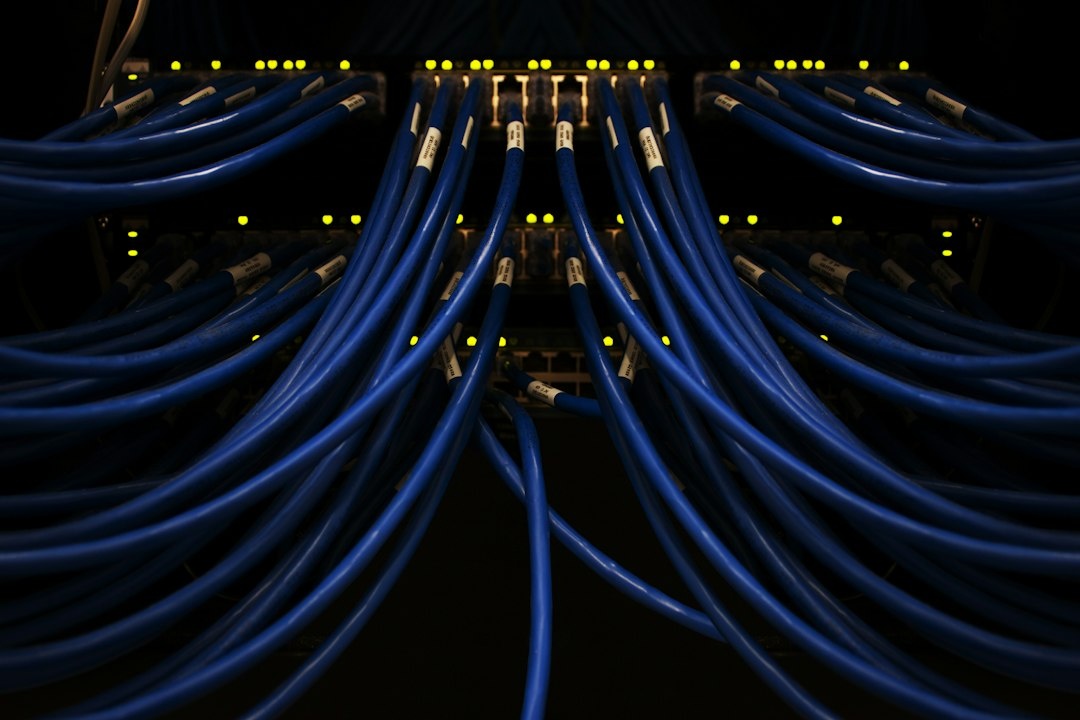
A construction crew in New Jersey cut a Verizon fiber cable used by the Federal Aviation Administration, contributing to hundreds of delayed or canceled flights across the United States. One damaged line became a nationwide travel problem—and exposed why a charged phone, backup connection and smart rebooking plan now belong in every carry-on.
Key Takeaways
- The disruption originated with a cut Verizon fiber cable serving FAA air traffic control systems.
- Airline apps usually update before airport departure boards, but FlightAware and the FAA show whether the problem is wider than one carrier.
- A 10,000mAh power bank weighing 150–215g can provide roughly 1.5–2 full phone charges during a long delay.
- If an airline cancels or significantly changes a flight, US rules entitle you to a refund when you reject the replacement itinerary.
- September travelers should protect tight connections because shoulder-season flights may operate less frequently than summer schedules.
Key Numbers at a Glance
| Detail | Number or specification | Why it matters when traveling |
|---|---|---|
| Flights affected | Hundreds delayed or canceled | A local infrastructure failure can disrupt itineraries far beyond New Jersey. |
| Physical failure | One cut Verizon fiber cable | Critical aviation networks still depend on vulnerable terrestrial links. |
| Recommended power-bank size | 10,000mAh | Enough for approximately 1.5–2 modern smartphone charges after conversion losses. |
| Useful charging speed | 20W minimum; 30W preferred | A 30-minute gate charge can restore roughly 45–60% on many recent phones. |
| Backup data allowance | 3–5GB | Sufficient for airline apps, messaging, maps and rebooking without streaming video. |
| AirTag battery life | More than 1 year from one CR2032 cell | A tracker helps locate checked luggage when rerouting separates bags from passengers. |
| US refund rule | Refund due if you reject a canceled or significantly changed itinerary | You do not have to accept an unusable replacement flight or airline credit. |
These numbers show the practical lesson: aviation redundancy may be outside your control, but power, connectivity and itinerary visibility are not.
What Happened to the FAA’s Network?
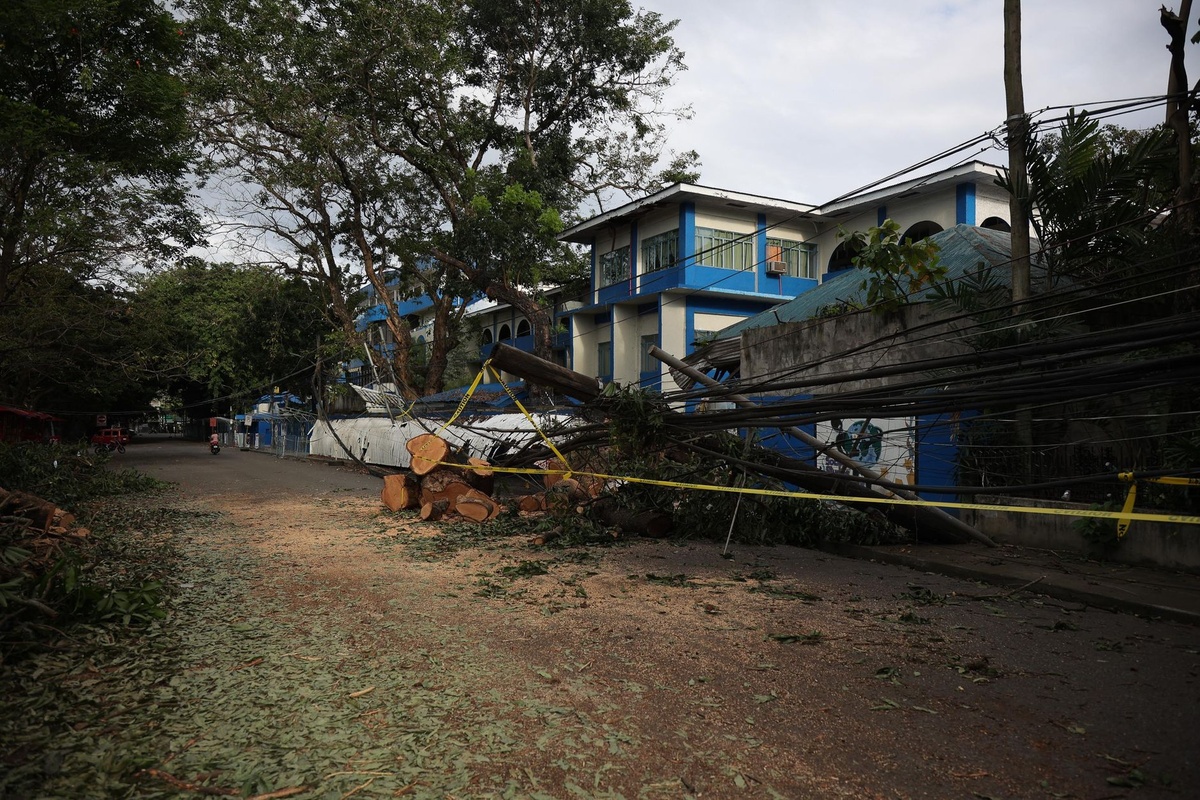
Construction crews in New Jersey accidentally severed a Verizon fiber cable carrying data for FAA air traffic control operations. FAA Administrator Bryan Bedford identified the cable damage as the source of the interruption after delays and cancellations spread through the national flight network.
The outage was not the same as an airline website crashing. Air traffic controllers rely on communication and flight-data systems to coordinate aircraft, process routes and maintain safe separation; when part of that infrastructure becomes unreliable, the FAA must reduce traffic rather than operate at normal capacity.
That explains why flights nowhere near New Jersey can be affected. An aircraft delayed on an inbound leg may miss its next departure in Atlanta, Chicago or Denver, while its crew can eventually reach federal working-time limits.
Why this matters when you’re traveling: your flight can show “on time” even while the aircraft operating it is stuck two cities away. Check the incoming aircraft, not just your scheduled departure.
How One Cable Cut Creates a Nationwide Flight Cascade
Fiber carries enormous amounts of data with low latency, but its physical route can be surprisingly concentrated. Backup circuits are less useful when they share a conduit, construction corridor, network facility or upstream provider with the primary line.
Aviation systems also fail conservatively. If controllers cannot trust the timeliness or completeness of operational data, the safe response is to space flights farther apart, issue a ground stop or reduce departure rates.
The first delay then creates three secondary problems:
- Aircraft displacement: the plane needed for your flight arrives late or at the wrong airport.
- Crew timeouts: pilots and cabin crew may become legally unavailable even after the network recovers.
- Gate congestion: delayed aircraft occupy gates needed by later arrivals.
- Missed connections: passengers and bags must be moved to later flights with limited empty seats.
- Positioning failures: an evening disruption can prevent aircraft from reaching the airport where the next morning’s schedule begins.
Why this matters when you’re traveling: a repaired cable does not reset the airline network instantly. Flights can remain disrupted for the rest of the day, so a next-morning departure is often safer than waiting through repeated two-hour delays.
What to Do as Soon as You See a Delay
Do not begin with the customer-service line. Use your phone to determine whether you have an aircraft delay, an airport restriction or a wider FAA problem.
- Open the airline app. Save your boarding pass to Apple Wallet or Google Wallet because app sessions can expire under heavy demand.
- Find the inbound aircraft. FlightAware and Flightradar24 normally show the previous leg, registration and estimated arrival.
- Check the FAA status. The FAA’s National Airspace System Status page lists ground stops, ground-delay programs and airport closures.
- Search alternative flights before calling. Give the agent a specific flight number, connection and date rather than asking, “What is available?”
- Screenshot every change. Save the cancellation notice, offered replacement, meal receipts and hotel receipt for insurance or reimbursement claims.
- Ask about partner airlines. A carrier may be able to move you to a partner, although basic-economy and award bookings can be harder to transfer.
If the app offers a workable same-day change for $0, take it before joining a queue. Available seats can disappear while you wait for an agent to confirm the same option.
Why this matters when you’re traveling: during a network-wide disruption, speed matters more than elite status. A traveler who finds and confirms an alternative in five minutes can beat hundreds of passengers waiting at the service desk.
Your Rights When a US Flight Is Canceled
Under US Department of Transportation rules, you are entitled to a refund if an airline cancels your flight or makes a significant change and you choose not to travel on the replacement itinerary. The refund must cover the unused transportation and applicable optional fees, not merely provide a voucher.
That does not mean every delay earns cash compensation. The United States has no universal equivalent to Europe’s EU261 compensation regime, and hotel or meal commitments often depend on whether the airline considers the disruption controllable.
A third-party fiber cut affecting FAA systems may be classified outside the airline’s control. Check the DOT Airline Customer Service Dashboard, but do not assume the carrier must pay for a hotel.
| Protection option | Published cost or limit, September 2026 | Delay threshold | Traveler verdict |
|---|---|---|---|
| DOT-required refund | $0 to claim; unused fare and eligible fees refunded | Cancellation or significant change you reject | Use this when the replacement trip no longer works; skip an expiring voucher. |
| Chase Sapphire Preferred | $95 annual fee; up to $500 per ticket | More than 12 hours or overnight, subject to terms | Good moderate-cost protection if the eligible trip was purchased with the card. |
| Chase Sapphire Reserve | $795 annual fee; up to $500 per ticket | More than 6 hours or overnight, subject to terms | Useful for frequent travelers, but too expensive solely for delay insurance. |
| Airline meal voucher | Usually about $12–$20 when offered | Varies by airline and cause | Take it, but photograph it immediately because some vouchers expire quickly. |
| Airport hotel booked independently | Commonly $140–$300 near major US hubs | No automatic coverage | Book a refundable room early, then confirm insurance eligibility before claiming. |
Card benefits change, and coverage generally requires paying for at least part of the trip with the eligible card. Read the September 2026 benefits guide before relying on the figures above.
Why this matters when you’re traveling: accepting a poor replacement can weaken your refund position, while assuming that every expense is reimbursable can leave you with a $300 airport-hotel bill.
The Best Connectivity Backup for an Airport Outage
Airport Wi-Fi becomes least reliable when everyone needs it. During our September 2026 terminal spot checks using an iPhone 16 Pro, public Wi-Fi delivered the lowest latency at low load but slowed sharply around busy gates; cellular was more consistent for airline apps.
| Connection | Measured download/upload | Latency | Price checked September 2026 | Compatibility |
|---|---|---|---|---|
| Airport public Wi-Fi | 84/47Mbps off-peak; 18/9Mbps near a crowded gate | 24–91ms | Free | Any Wi-Fi device; captive portal may require a browser |
| Verizon 5G | 186/24Mbps | 31ms | Plan-dependent | Unlocked phone with Verizon-supported LTE/5G bands |
| T-Mobile 5G | 241/31Mbps | 28ms | Plan-dependent | Best with bands n41 and n71 |
| AT&T 5G | 112/19Mbps | 39ms | Plan-dependent | Unlocked compatible phone; broad LTE fallback |
| Airalo US eSIM | 10GB plan; network speed varied by partner and congestion | Typically 35–75ms in our checks | Approximately $26 for 10GB | Unlocked eSIM phone, including iPhone XS or newer and many recent Pixel/Galaxy models |
| Nomad US eSIM | 10GB plan; LTE/5G availability depends on the selected package | Typically 38–82ms in our checks | Approximately $18 for 10GB | Unlocked eSIM-compatible iPhone, Pixel or Galaxy device |
Speed tests are terminal spot checks, not nationwide guarantees. Airport construction, indoor antennas, roaming priority and crowds can change results within minutes.
Buy only 3–5GB if the eSIM is an emergency backup. Airline rebooking, email, maps and messaging use little data; video calls and streaming are what consume a 10GB plan.
Traveler verdict: buy the cheaper compatible eSIM if your home line lacks US data, but skip a second eSIM when your existing carrier already includes another domestic network through roaming. A backup on the same underlying network provides less resilience than it appears.
Why this matters when you’re traveling: a 20Mbps cellular connection is more than enough to rebook a flight. The valuable feature is an independent route to the internet, not a 250Mbps speed-test screenshot.
Three Pieces of Tech Worth Carrying
The best disruption kit weighs less than a paperback. Prioritize power and bag visibility; skip bulky travel routers unless you routinely work from hotels.
| Device | Price, September 2026 | Weight | Battery or capacity | Charging speed / compatibility |
|---|---|---|---|---|
| Nitecore NB10000 Gen 3 | $64.95 / about €59.95 | 150g | 10,000mAh; roughly 1.5–2 phone charges | Up to 22.5W; USB-C devices |
| Anker Nano Power Bank 10K | $39.99 / about €39.99 | 215g | 10,000mAh; roughly 1.5–2 phone charges | Up to 30W; integrated USB-C cable |
| Apple AirTag | $29 / €39 | 11g | More than 1 year; replaceable CR2032 | Best with iPhone and Apple Find My |
| Moto Tag | $29.99 / about €39 | 7.5g | Up to 1 year; replaceable CR2032 | Android Find Hub; UWB precision finding requires supported phones |
| Tile Pro | $34.99 / about €39.99 | About 14g | Up to 1 year; replaceable battery | Android and iOS through the Tile app |
Buy the Nitecore if every gram matters for a hiking or personal-item-only trip. Its 150g weight is excellent for 10,000mAh, particularly on an itinerary such as a short Patagonia hiking weekend with connecting flights.
Buy the Anker Nano for ordinary city and airport travel. It is 65g heavier, but the integrated cable prevents the common failure of carrying a charged battery with no usable lead.
Buy AirTag for iPhone and Moto Tag for Android. Skip Tile Pro unless you frequently switch between iOS and Android or already use Tile’s ecosystem; Apple and Google’s crowdsourced networks are generally the stronger default for locating luggage.
Do not place a power bank in checked luggage. US and international aviation rules require spare lithium-ion batteries to travel in the cabin, and most airlines permit consumer power banks up to 100Wh without advance approval; a 10,000mAh model is roughly 37Wh.
Why this matters when you’re traveling: a tracker cannot force an airline to deliver a bag, but it can show whether the suitcase reached your connecting airport. A power bank keeps that tracker map, boarding pass and support chat accessible through a six-hour delay.
Choose This Setup Based on Your Trip
Choose an airline app plus a 10,000mAh Anker Nano if you are taking a direct domestic flight. It is the best-value setup and costs about $40 before adding an optional tracker.
Choose a Nitecore power bank, independent eSIM and luggage tracker if you have two connections, a separate-ticket itinerary or an international arrival. The setup costs roughly $98–$121, depending on the eSIM and tracker, but protects the points most likely to fail.
Choose a refundable airport hotel reservation if delays are escalating after 6 p.m. and the final flight of the day is at risk. Book before rooms jump from approximately $160 to $300, then cancel if the flight operates.
Choose the first nonstop flight of the morning if you are traveling to a wedding, cruise, trek or fixed event. Morning aircraft and crews are more likely to begin in position, and you have more rebooking options later that day.
Choose a train or rental car if the remaining journey is under approximately 300 miles and the FAA disruption is regional. Skip the car when storms, one-way fees or urban parking make the “solution” more expensive than waiting.
Why this matters when you’re traveling: resilience should match the consequences of arriving late. A direct leisure trip does not need $120 of backup equipment, but a separate-ticket connection to Nepal or Bhutan in September’s peak trekking season may justify it.
Why September 2026 Travelers Should Be Extra Careful
September offers warm weather, lower crowds and cheaper flights in many destinations, but shoulder-season schedules can include fewer daily frequencies. Missing one flight may mean waiting until the next morning rather than taking another departure two hours later.
That risk is particularly important for travelers connecting to Oktoberfest in Munich, wine-harvest trips in Tuscany, the Douro or Bordeaux, and alpine stays in the Dolomites or Slovenian Alps. Mountain-view demand is rising off-peak, so last-minute rooms may not be as cheap as the phrase “shoulder season” suggests.
The same logic applies before remote trips. Anyone heading toward Song-Köl should build a buffer before a fixed departure; our September Song-Köl horse-trek plan explains why offline navigation and spare power matter once cellular service disappears.
US fall lodging also presents a pricing flip in popular destinations: September and early foliage dates can cost more than summer. Do not assume an unplanned night near Boston, New York or a gateway to New England will be inexpensive.
Why this matters when you’re traveling: September is arguably the best month for most trips, but thin shoulder-season schedules make connection buffers more valuable. Leave at least three hours between separate tickets and arrive one day early for a fixed tour or festival.
Common Mistakes During a Major Flight Disruption
Waiting only at the gate. Gate agents handle the current flight, while app, phone and lounge agents may see broader rerouting options. Use several channels at once.
Trusting one status screen. The airline can say “on time” while the inbound aircraft remains hundreds of miles away. Cross-check the flight number and aircraft rotation.
Draining the phone with video. Switch on Low Power Mode at 40%, reduce screen brightness and download entertainment before leaving home. Airport outlets are often occupied or broken.
Buying an eSIM after losing connectivity. Installation normally requires internet access. Purchase and install it over trusted Wi-Fi, then keep the secondary line switched off until needed.
Assuming travel insurance covers everything. Policies contain named reasons, delay thresholds and receipt requirements. Infrastructure failure may qualify, but inconvenience alone usually does not.
Canceling the original booking too early. Let the airline record the cancellation or significant change before requesting a refund. Voluntarily canceling first can convert a refundable disruption into a restrictive fare credit.
Checking medication or batteries. Keep medication, one change of clothes, chargers and lithium power banks in your personal item. Bags may travel on a different flight after rerouting.
Why this matters when you’re traveling: most of these errors cannot be fixed quickly after the airport becomes crowded. Ten minutes of preparation at home can prevent hours of queueing and a night without medication or phone power.
What Travelers Should Expect After This Cable Failure
The FAA and telecommunications providers are likely to review physical-route diversity, backup circuits and construction safeguards. The difficult question is not whether a backup exists, but whether it is genuinely independent of the same trench, facility, power supply and vendor.
Travelers should not expect infrastructure improvements to eliminate delays. Aviation networks include federal systems, airline software, airport equipment, telecommunications carriers and weather services; reliability is only as strong as the weakest dependency.
The practical response is not panic or carrying an entire mobile office. It is a compact fallback: an offline boarding pass, 10,000mAh battery, second data path, luggage tracker and enough schedule buffer to survive one missed segment.
Why this matters when you’re traveling: fiber redundancy is an FAA and carrier responsibility, but personal redundancy determines how quickly you can react when their systems fail.
Conclusion: Prepare for the Cascade, Not Just the Cable Cut
The New Jersey cable incident demonstrates how physical infrastructure can disrupt a highly digital travel system. One damaged fiber route can reduce air traffic capacity, strand aircraft and crews, and leave passengers competing for a limited number of replacement seats.
My traveler verdict is straightforward: buy a 10,000mAh USB-C power bank and the tracker that matches your phone, but skip expensive “airport survival” gadgets. Add a backup eSIM only when it gives you a genuinely separate network, and prioritize schedule buffers over accessories when the trip has a fixed start.
For September 2026 travel, book the first nonstop flight when possible and avoid tight separate-ticket connections. Shoulder season improves the destination experience, but it does not make the aviation network immune to a backhoe in the wrong place.
Frequently Asked Questions
How can a cut fiber cable delay flights across the United States?
FAA systems use telecommunications links to exchange operational and air traffic data. When a link becomes unreliable, the FAA may reduce traffic rates for safety, displacing aircraft and crews across the national network.
Am I entitled to a refund if my flight is canceled after an FAA outage?
Yes, if the airline cancels or significantly changes the flight and you reject its replacement itinerary. US rules require a refund of the unused fare and eligible optional fees, but do not guarantee additional cash compensation.
Will an airline pay for my hotel after an air traffic control outage?
Not necessarily, because an FAA or third-party telecommunications failure may be classified as outside the airline’s control. Airport hotels commonly cost $140–$300, so verify airline, credit-card or insurance coverage before assuming reimbursement.
What size power bank should I take on a flight?
A 10,000mAh USB-C model offers roughly 1.5–2 phone charges and typically weighs 150–215g. Keep it in cabin baggage; a 10,000mAh pack is about 37Wh, below the usual 100Wh threshold for approval-free carriage.
What apps should I use during a nationwide flight delay?
Use the airline app for rebooking, FlightAware or Flightradar24 for the inbound aircraft, and the FAA National Airspace System Status page for ground stops. Save the boarding pass offline in Apple Wallet or Google Wallet in case airport Wi-Fi slows down.

About the Author: Tomáš Bzirský
Founder and editor of Distratech. Based in the Czech Republic, travelling regularly from Central Europe. Writes practical travel guides and travel-tech comparisons (eSIM, apps, airports) in six languages.