If there’s a European bike route that delivers castles, vineyards, beer gardens, and smooth riverside paths with almost zero hills, this is it. The Danube Cycle Path from Passau to Vienna covers about 300 km (186 miles) of mostly flat, paved cycling — and in summer 2026, it’s buzzing with riders chasing long daylight hours and warm evenings along the water.
This is the classic 6-day self-guided version, with luggage transfers so you ride light and roll into your next hotel with your bag already waiting. Here’s exactly how to do it, what it costs, and what I’d skip or upgrade.
Key Takeaways
- Total distance: ~300 km over 6 days, mostly flat and paved.
- Expect €850–€1,200 ($920–$1,300) per person including hotels, luggage transfers, and bike rental.
- Best months: June–September; July sees 14–15 hours of daylight and temps around 24–30°C (75–86°F).
- Luggage transfers cost ~€45–€65 per day if booked separately; most packages include it.
- Trains from Vienna to Passau take ~2.5–3 hrs and cost €25–€40.
Why This Route Works So Well in Summer
The Danube between Germany and Austria is engineered for easy cycling. Dedicated bike lanes, clear signage (“Donauradweg”), and minimal elevation make it ideal for casual riders.
In late June and July, sunrise is around 5:00 am and sunset near 9:00 pm. That gives you flexibility: start early to beat the heat, or ride late and linger at a riverside heuriger (wine tavern).
Compared to something like the Laugavegur Trail in Iceland — where weather dictates everything — the Danube Path is predictable, paved, and forgiving. This is adventure with infrastructure.
Day-by-Day Itinerary (6 Days, 300 km)
Day 1: Passau → Schlögen (≈ 45 km)
Passau, the “City of Three Rivers,” is your start point. Spend an hour at St. Stephen’s Cathedral (open daily 6:30 am–6:00 pm, free entry) before picking up your bike.
The route quickly turns scenic as you follow the river toward the Schlögen Loop — a dramatic horseshoe bend. It’s mostly paved riverside path with tiny ferry crossings (€3–€5 per person with bike).
Stay: Riverresort Donauschlinge (rooms from €140 with breakfast). Skip generic guesthouses in the hills — you want river access and a terrace.
Day 2: Schlögen → Linz (≈ 55 km)
This is an easy cruising day. Wide asphalt paths, minimal traffic, constant river views.
Stop at Café Zilleck in Aschach for apple strudel (€4.80) and espresso (€3.20). Linz itself is more modern than pretty, so don’t over-plan sightseeing.
Dinner: Wirt am Graben — schnitzel €18, local beer €5.50. Better value and atmosphere than tourist-heavy Hauptplatz spots.
Day 3: Linz → Grein (≈ 60 km)
Longer distance, but still flat. Fields, small villages, and fewer crowds.
Grein is charming and compact. Visit Greinburg Castle (open 10:00 am–5:00 pm, €9 entry). It’s a quick cultural stop without derailing your schedule.
Stay: Hotel-Garni Goldenes Kreuz (rooms ~€110–€130). Book early in July — this town fills fast.
Day 4: Grein → Melk (≈ 50 km)
You enter the Strudengau region, one of the most scenic sections. Expect cliffs and forested hills rising above the Danube.
Melk Abbey is non-negotiable. Open daily 9:00 am–5:30 pm; tickets €16. Go late afternoon when tour buses thin out.
Skip overpriced abbey-adjacent cafés — walk 5 minutes into town for better prices.
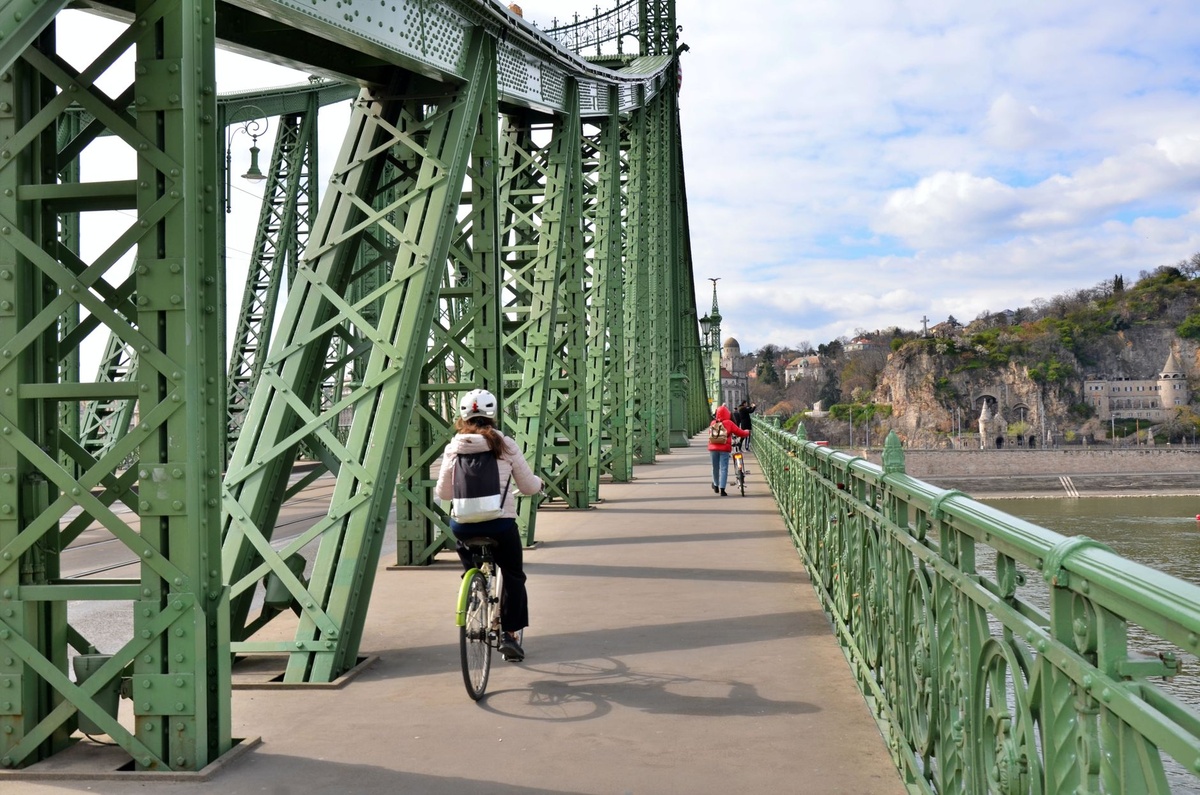
Day 5: Melk → Krems (≈ 40 km)
This is Wachau Valley, a UNESCO-listed stretch of vineyards and apricot orchards. It’s the postcard section.
Stop in Dürnstein for a swim break. Public riverside areas are free; local pools charge around €6.
Wine stop: Domäne Wachau — tastings from €15. Way better value than random heurigers charging €6 per small glass.
Day 6: Krems → Vienna (≈ 50 km)
The final stretch gradually urbanizes but remains well marked. Once you reach Vienna, dedicated bike lanes guide you into the center.
Celebrate at Schweizerhaus in the Prater. Pork knuckle €21, large Budweiser €6.80. Touristy? Yes. Worth it? Also yes.
Luggage Transfers: DIY vs Tour Company
Riding 40–60 km daily is easy. Doing it with panniers stuffed with clothes? Less fun.
Most travelers book through companies like:
Typical 6-day package (3-star hotels, breakfast, luggage transfer, route maps): €799–€1,050 per person in July.
Bike rental adds €110–€150 (standard trekking bike) or €220–€260 (e-bike).
Cost Comparison
| Option | Cost (6 days) | Pros | Cons |
|---|---|---|---|
| Tour Package | €900–€1,200 | Hotels + luggage handled | Less flexibility |
| DIY + Luggage Service | €750–€950 | Choose your own hotels | More planning |
| Full DIY (carry bags) | €600–€800 | Cheapest | Heavier ride daily |
If booking your own accommodation, be careful with peer-to-peer rentals — scams targeting hosts and guests have surged recently, as we covered in our piece on Airbnb security risks in 2026. For this route, small family-run hotels are often safer and more bike-friendly anyway.
Full Budget Breakdown (Per Person, 6 Days)
Here’s a realistic mid-range estimate for July 2026:
- Hotels (5 nights, avg €130/night shared): €325
- Luggage transfer: €250
- Bike rental (trekking): €130
- Food & drinks: €35/day = €210
- Attractions & ferries: €60
- Train Vienna → Passau: €35
Total: ~€1,010 ($1,090)
Compare that to a guided cycling tour at €1,800+ — you’re saving nearly €800 and still getting the same route.
Getting There + Logistics
Train: Vienna → Passau
ÖBB Railjet trains run roughly every 2 hours. Travel time: 2h30–3h.
Advance tickets start at €24.90. Walk-up fares can hit €45. Bikes require a separate reservation (~€3).
Taxi comparison: Passau station to city center is 5 minutes. Taxi ~€12 vs 15-minute walk free. Walk.
Bike Apps & Navigation
- Komoot: Best for offline maps and GPX.
- Google Maps: Good in cities, unreliable for river detours.
- Windy: Check wind direction — headwinds matter on flat terrain.
The route is well signposted, but construction detours happen every summer.
Where to Splurge (and Where Not To)
Splurge: E-bike if temperatures hit 30°C (86°F). The extra €100 can make long sunny stretches far more pleasant.
Skip: Luxury 4-star hotels in Linz or Vienna for this trip. You’ll arrive sweaty and tired — a clean, air-conditioned 3-star for €120 is perfect.
Upgrade: Book river-view rooms in Wachau. The €20–€30 premium is worth it at sunset.
Best Time to Ride (June–September 2026)
June and September are ideal: 20–26°C (68–79°F), fewer crowds.
July–August = warmest and busiest. Expect 24–30°C (75–86°F). Book hotels 2–3 months ahead.
Unlike rugged coastal hikes like the Rota Vicentina in Portugal, this path rarely feels remote. You’re never far from a café, bakery, or train station.
Pro Tips for a Smooth Ride
- Start riding by 8:00 am in July to avoid midday heat.
- Carry €10–€20 cash for small ferry crossings.
- Pack padded cycling shorts — even for casual riders.
- Reserve Melk and Wachau hotels early (peak bottleneck).
- Plan shorter final day if you want time to explore Vienna properly.
Is the Danube Path Worth It?
Yes — especially as a first multi-day cycling trip in Europe.
You get alpine scenery, vineyards, castles, and excellent infrastructure without hardcore logistics. It’s accessible, affordable, and scenic in a way that feels almost unfair.
If you want a summer adventure that’s active but not extreme, book the bike, reserve the luggage transfer, and let the river guide you east.
Looking for where to stay at the end of your Danube ride? Book hotels in Vienna to lock in the best rates for your dates.
Frequently Asked Questions
How much does it cost to cycle from Passau to Vienna?
Expect €850–€1,200 per person for a 6-day self-guided trip with hotels and luggage transfers. Full DIY with no luggage service can drop costs to around €600–€800.
Is the Danube Cycle Path difficult?
No. The 300 km route is mostly flat and paved, with daily distances of 40–60 km. It’s suitable for beginners with basic fitness.
Do I need to book luggage transfers in advance?
Yes for summer (June–August). Many providers sell out 4–8 weeks ahead, especially in the Wachau Valley section.
Can I do the route with an e-bike?
Absolutely. E-bike rentals cost around €220–€260 for 6 days and are popular in July when temperatures reach 30°C.

About the Author: Tomáš Bzirský
Founder and editor of Distratech. Based in the Czech Republic, travelling regularly from Central Europe. Writes practical travel guides and travel-tech comparisons (eSIM, apps, airports) in six languages.