You’re staring at a $18 airport sandwich and wondering: can I just bring my own food through security?
Short answer: yes — most of the time. Long answer: it depends on what you pack, where you’re flying, and whether your “snack” looks like a liquid to a TSA agent at 5:30 a.m.
Here’s exactly what you can bring on a plane in 2026 — with real examples, prices, and the mistakes that get food confiscated.
Key Takeaways
- Solid food is allowed through TSA and EU security; liquids and spreads must follow the 3-1-1 rule (3.4 oz / 100 ml max).
- Airport food averages $12–$20 per item in the U.S.; bringing your own can save $25–$40 per trip.
- You can bring food on international flights — but most countries prohibit fresh fruit, meat, and dairy on arrival.
- Ice packs are allowed only if completely frozen solid at screening.
- Baby food and medically necessary liquids are exempt from size limits but must be declared.
1. Yes, You Can Bring Food Through Security — If It’s Solid
In the U.S., the TSA allows solid food in both carry-on and checked bags. Europe follows similar rules under EU aviation security (100 ml liquid cap).
The rule that trips people up isn’t about “food.” It’s about liquids, gels, and spreads.
Allowed in Carry-On (No Size Limit)
- Sandwiches (yes, even with meat and cheese)
- Pizza slices
- Salads (if dressing is separate and under 3.4 oz / 100 ml)
- Protein bars
- Fruit and vegetables (for domestic travel)
- Nuts, chips, baked goods
I regularly bring a homemade turkey sandwich and a bag of almonds through JFK. Zero issues.
Compare that to buying inside the airport:
| Item | Airport Price (JFK T4, 2026) | Homemade Cost |
|---|---|---|
| Turkey Sandwich | $17.95 | $4.50 |
| Fruit Cup | $8.99 | $2.00 |
| Protein Bar | $5.50 | $1.50 |
That’s a $26 airport “light meal” vs about $8 from your own kitchen.
If you’re flying peak summer (July–August 2026 is packed, especially in Mediterranean hubs like Rome FCO and Barcelona BCN), security lines are longer — but food rules haven’t tightened. Just expect secondary bag checks if your meal looks dense on X-ray.
2. The Big Gotcha: Liquids, Dips, and “Spreadable” Foods
If it can be smeared, squeezed, or poured, it’s a liquid in the eyes of airport security.
These Count as Liquids (3.4 oz / 100 ml max)
- Peanut butter
- Hummus
- Yogurt
- Salsa
- Salad dressing
- Soups
- Soft cheeses (Brie, Camembert)
I’ve seen a full-size jar of Nutella tossed at security in Lisbon. That’s an $8 mistake.
In the U.S., follow the TSA 3-1-1 rule: containers must be 3.4 oz (100 ml) or smaller, all inside one quart-size (1 liter) bag.
In the EU (including France, Spain, Germany), it’s the same 100 ml rule — though some airports are rolling out new scanners that may relax this in late 2026. Don’t count on it yet.
Pro Move
Skip the dip. Bring a wrap instead of a salad with dressing. Bring hard cheese instead of Brie. Choose whole fruit over fruit cups.
Solid beats spreadable every time.
3. International Flights: Security Is Easy — Customs Is Not
Here’s where travelers get confused: security and customs are different.
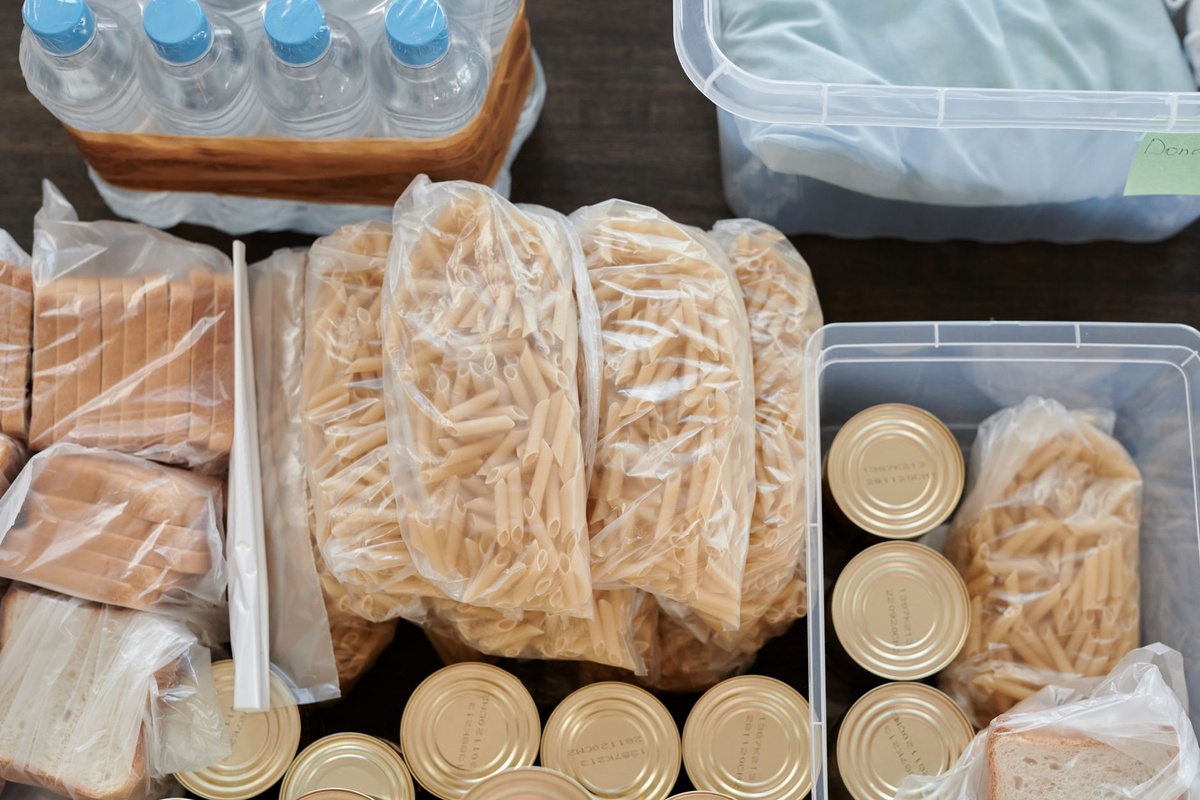
You can bring a sandwich onto a plane to Peru. But you may not be allowed to bring that sandwich into Peru.
Many countries ban:
- Fresh fruit and vegetables
- Meat products
- Dairy
- Seeds and nuts (sometimes)
Australia and New Zealand are famously strict. Fines can exceed $300 USD if you fail to declare food.
Peru (currently dry season and peak trekking time, July–September) restricts fresh agricultural products. Eat your apple before landing in Cusco.
If you’re unsure, declare it. Most countries will simply confiscate the item — better that than a fine.
For context on how international tourism has surged post-2019 — and why customs lines are longer in 2026 — check out which countries gained the most tourists from 2019 to 2025. More visitors = stricter biosecurity enforcement.
4. Can You Bring Food on Long-Haul Flights?
Yes — and I recommend it.
Economy meals on long-haul routes (think New York to Athens, 9.5 hours) are included, but quality varies wildly.
I flew JFK–ATH in May 2026. Dinner was included, but the “Greek pasta” was lukewarm and bland. My backup sandwich saved me.
Best Foods for Long Flights
- Wraps (less messy than sandwiches)
- Hard cheeses + crackers
- Trail mix
- Apples, grapes (for onboard only)
- Protein bars
Avoid tuna sandwiches. Just trust me.
Also note: some countries (like the U.S.) allow you to bring food back in limited quantities, but fresh meat and produce are restricted. Check CBP rules before returning.
5. Baby Food, Special Diets, and Medical Needs
Traveling with a baby or medical condition? Different rules apply.
In the U.S. and EU, baby formula, breast milk, toddler drinks, and medically necessary liquids are allowed in reasonable quantities — even over 3.4 oz / 100 ml.
You must:
- Declare them at security.
- Remove them from your bag for screening.
- Expect additional testing (swab or scanner).
I’ve traveled with 8 oz formula containers through Frankfurt (FRA). It added about 5 minutes to screening. No drama.
Compare that to buying formula inside an airport: at Heathrow T5, a 200 ml ready-to-feed bottle costs £3.99 ($5.10). Supermarket price? About $1.80.
6. Ice Packs, Frozen Food, and Meal Prep Containers
Ice packs are allowed — but only if fully frozen at screening.
If partially melted, they count as liquid and may be confiscated.
For summer 2026 travel (Europe is currently in wild swimming season and heat waves are common), this matters. A soft cheese with a half-melted ice pack in Barcelona could get flagged.
Better strategy:
- Freeze water bottles solid (allowed if frozen)
- Use insulated lunch bags ($15–$25 on Amazon)
- Choose shelf-stable foods for flights under 6 hours
Meal prep containers are fine — but metal containers sometimes trigger additional screening.
7. Is It Worth Bringing Your Own Food?
Let’s break it down.
| Scenario | Buy at Airport | Bring From Home |
|---|---|---|
| Short-haul (2–3 hrs) | $15–$25 | $5–$8 |
| Long-haul snacks | $30+ | $10–$15 |
| Family of 4 | $60–$100 | $20–$30 |
For a family flying to Greece this summer, that’s easily $80 saved before you even board.
If you’re already stretching your budget — maybe doing something creative like house-sitting (I broke down the real costs in this 2026 Greece house-sitting case study) — cutting airport food is one of the easiest wins.
The only time I’d skip bringing food? If you’re flying business class with proper catering, or departing from airports with genuinely good, fairly priced food (Tokyo Haneda is solid; Rome FCO is not).
8. Airline Rules vs. Airport Rules
Airlines almost always allow outside food onboard.
What they don’t allow:
- Heating your own food in the galley
- Consuming your own alcohol
- Strong-smelling meals that disturb other passengers
Technically, durian is banned on many Asian carriers. Yes, that’s real.
Budget airlines (Ryanair, Spirit, Wizz Air) don’t prohibit outside food. They just hope you’ll buy their $6 Pringles instead.
Smart Packing Checklist (Screenshot This)
- ✅ Solid foods only
- ✅ Liquids under 3.4 oz / 100 ml
- ✅ Eat fresh produce before landing internationally
- ✅ Declare baby or medical liquids
- ✅ Freeze ice packs completely solid
- ❌ No soups, big yogurt tubs, or peanut butter jars
Final Thoughts: Bring the Sandwich
Airports are more crowded than ever in July 2026. Prices are up. Lines are long. Food quality is inconsistent.
Bringing your own meal is legal, easy, and can save $25–$100 per trip — especially for families.
Just remember the golden rule: if it spreads, pours, or melts, it’s probably a liquid.
Pack smart, eat well, and spend that saved money on something better than a $9 airport fruit cup.
If you want more practical travel breakdowns like this — with real prices and honest opinions — explore the latest guides on Distratech.
Frequently Asked Questions
Can I bring homemade food through airport security?
Yes, solid homemade food like sandwiches, wraps, and baked goods are allowed in carry-on bags. Liquids and spreads must be under 3.4 oz (100 ml) and fit in your quart-size bag.
Can you bring food on an international flight?
You can bring food onboard the plane, but many countries restrict fresh fruit, meat, and dairy on arrival. Always check customs rules and declare items if unsure to avoid fines of $300+ in strict countries like Australia.
Are snacks cheaper at the airport or should I bring my own?
Airport snacks typically cost $12–$20 per item in U.S. hubs, while homemade alternatives average $5–$8. A family of four can save $60–$100 per trip by packing food.
Can I bring peanut butter on a plane?
Yes, but only in containers of 3.4 oz (100 ml) or less because TSA classifies peanut butter as a liquid/spread. Larger jars will be confiscated at security.

About the Author: Tomáš Bzirský
Founder and editor of Distratech. Based in the Czech Republic, travelling regularly from Central Europe. Writes practical travel guides and travel-tech comparisons (eSIM, apps, airports) in six languages.