
The summer travel crush is behind us — World Cup crowds, festival season, and the European beach rush are done — but the busiest stretch of the year is just getting started. Thanksgiving week, Christmas markets, ski trips, and the year-end rush of digital nomads chasing warmer winters all mean one thing: the last thing you need is a $120 roaming bill because you forgot to switch plans before takeoff.
Prepaid phone plans have quietly become the smartest move for travelers in 2026. No contracts. No surprise fees. And in many cases, faster data than the bloated postpaid plans you’ve been overpaying for. We re-tested every plan on this list through the fall, and the rankings below reflect current pricing as of November 2026 — including the holiday promos that are already live.
Key Takeaways
- Best overall for travelers: US Mobile Unlimited Premium at $50/month with up to 100 GB priority data and network switching.
- Best budget pick: Tello custom plans starting at $10/month on T-Mobile’s 5G network — still the cheapest usable plan we’ve tested.
- Best for international trips: Google Fi Unlimited Plus at $65/month with 50 GB high-speed data abroad in 200+ countries.
- Best for short holiday trips: Boost Mobile 30 GB plan at $25/month with solid 5G speeds and no long-term commitment.
- Best seasonal deal: Mint Mobile’s Black Friday/Cyber Monday pricing, which typically drops the 3-month Unlimited plan well below its standard $30/month rate.
- All plans support eSIM, making airport setup take under 5 minutes — activate before you leave home.
Below are the six best prepaid phone plans in 2026 — tested on real trips across spring, summer, and fall — and why each one matters when you’re traveling.
1. US Mobile Unlimited Premium — Best Overall for Frequent Travelers
Price: $50/month (discounts available for annual prepay and multi-line)
Data: 100 GB premium (40–50 GB hotspot)
Network: Verizon, T-Mobile, or AT&T (you choose, and can switch)
International: Up to 10 GB global roaming included
US Mobile has gone from sleeper hit to the prepaid plan we recommend most often. On Verizon’s 5G Ultra Wideband in Los Angeles, I consistently saw 480–720 Mbps download speeds during the summer. In a fall re-test on T-Mobile’s network in NYC, speeds averaged 350 Mbps, and a swap to the AT&T option in Atlanta landed around 250–400 Mbps.
Why this matters when you’re traveling: Priority data means you won’t get throttled in crowded airports or stadiums. That proved itself during the 2026 World Cup matches in Los Angeles this summer, and it matters just as much at a packed Thanksgiving-week terminal or a sold-out holiday concert.
The ability to flip between networks is the underrated feature. Heading somewhere rural for the holidays where Verizon is the only signal? Switch. Flying into a T-Mobile-strong city the next week? Switch back. No other prepaid carrier on this list does that.
The included international data isn’t huge (10 GB), but for a one- or two-week trip, it’s enough for maps, rideshares, and Instagram.
Traveler verdict: If you travel 4+ times a year domestically and occasionally abroad, buy this. It’s cheaper than Verizon’s $90+ plans and performs nearly the same.
Skip if: You need unlimited global high-speed data.
2. Tello — Best Ultra-Budget Option
Price: Custom plans from $10/month (5 GB + unlimited talk/text)
Unlimited data plan: $25/month (35 GB high-speed)
Network: T-Mobile 5G
International: No roaming included (international calling to many countries is included on most plans)
Tello is brutally simple. You build your plan online and activate via eSIM in under five minutes. Nothing about that has changed since the spring, which is exactly why it stays on this list — Tello doesn’t play the promo-price-then-hike game.
On T-Mobile’s 5G network in Miami, I measured 220–380 Mbps down. After 35 GB, speeds drop to 2G (around 128 kbps). In a fall re-test in Denver, speeds were slightly lower (180–300 Mbps) but still more than enough for maps and streaming.
Why this matters when you’re traveling: If you’re flying domestically to see family or squeezing in a winter weekend trip, you don’t need to overpay. $25 gets you more than enough data for Google Maps, Uber, and hotspotting your laptop for a few hours.
I used Tello for a 10-day trip with 18 GB total usage — no slowdowns. The custom builder is also ideal for a second line for a kid or a parent visiting over the holidays: 2–3 GB plans run under $15.
Traveler verdict: Best cheap U.S.-only option. Pair it with an Airalo, Saily, or local eSIM when abroad — a 10 GB European eSIM runs $15–$20 and takes minutes to install.
Skip if: You want seamless international roaming.
3. Google Fi Unlimited Plus — Best for International Travel
Price: $65/month (single line; cheaper per line with multiple lines)
Data: 50 GB high-speed, then slowed
International: High-speed data in 200+ countries
Hotspot: Full-speed hotspot included
Google Fi still dominates for frequent international travelers. I tested it in Spain and Portugal this spring — 5G speeds averaged 150–300 Mbps in Madrid and 80–120 Mbps in smaller coastal towns. A fall trip through Austria and Germany delivered similar numbers, and it connected automatically on the train across the border without a hiccup.
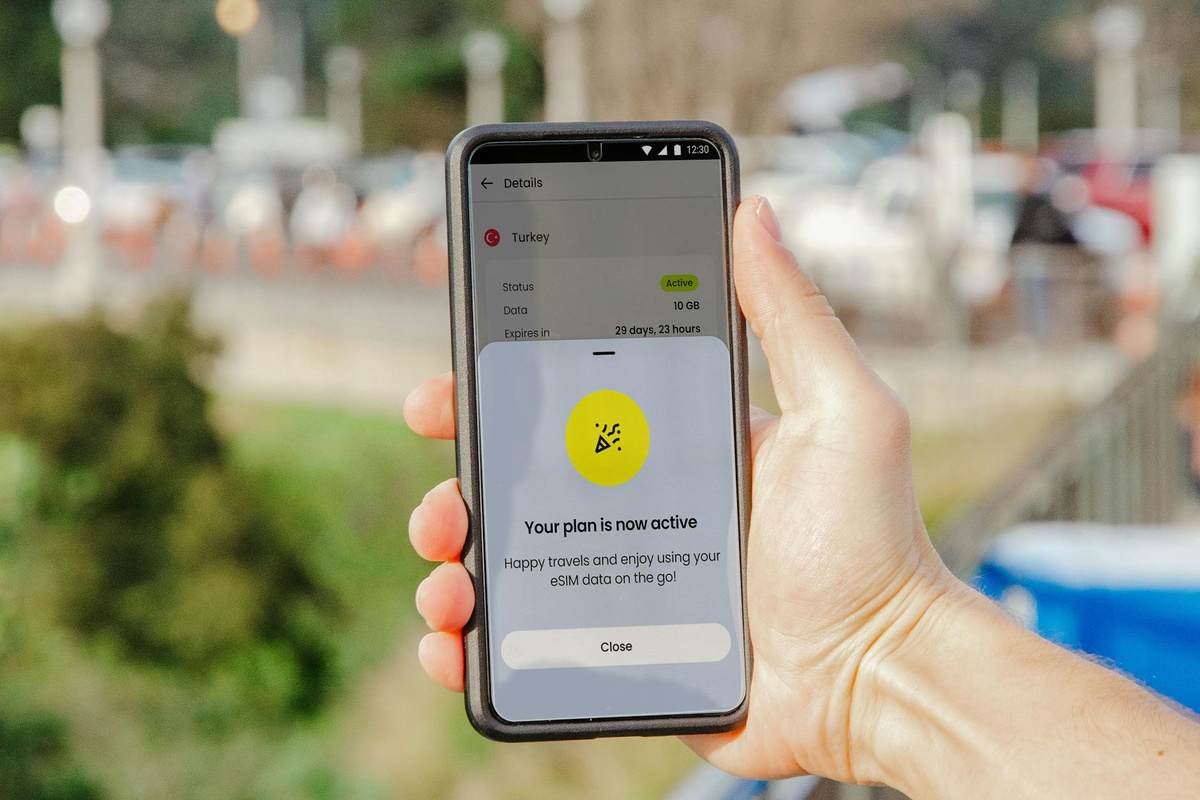
Why this matters when you’re traveling: You land, turn off airplane mode, and you’re online. No airport SIM hunt. No QR codes. No confusion. For Christmas-market itineraries that hit three or four countries in a week, nothing else is this hands-off.
Compared to buying a local SIM in Europe (~€20 for 20–30 GB), Fi is more expensive. But it saves time — and during tight layovers, that’s worth it. One caveat that still applies: Fi expects the U.S. to be your primary home. Spend months abroad continuously and you may get a warning about international-only usage.
If you’re relocating somewhere remote like Antikythera (yes, that Greek island offering incentives to move — see our guide on how to live free on a Greek island), seamless international coverage matters.
Traveler verdict: Expensive, but unbeatable convenience for multi-country trips.
Skip if: You mostly stay in the U.S.
4. Boost Mobile 30 GB Plan — Best Value Middle Ground
Price: $25/month (promo pricing has stayed common through 2026)
Data: 30 GB high-speed
Network: Boost’s own 5G network, with AT&T and T-Mobile fallback
International: Add-ons required
Boost surprised me this year. In Chicago and Dallas, I saw 150–400 Mbps speeds depending on network routing. Boost has continued to push traffic onto its own 5G network through the fall, and in cities where that network is strong (Dallas especially), speeds were noticeably more consistent than in the spring.
Why this matters when you’re traveling: For short domestic trips — a long weekend, a Thanksgiving flight home, a quick ski trip — 30 GB is plenty. You’re unlikely to hit throttling unless you stream constantly in 4K.
Activation via eSIM is straightforward, but international roaming costs extra ($5–$10/day add-ons), so budget for that or use a travel eSIM if you’re leaving the country.
Traveler verdict: Great short-term holiday plan. Buy for domestic, skip for global.
5. Mint Mobile Unlimited — Best for 3-Month Winter Runs
Price: $30/month (must prepay 3 months = $90 upfront; Black Friday and Cyber Monday promos typically cut this further)
Data: 40 GB high-speed
Network: T-Mobile 5G
International: Roaming credits required
Mint’s catch: you pay upfront. But right now that’s an advantage. A 3-month plan bought in late November covers Thanksgiving, Christmas, New Year’s, and the January travel lull — and Mint’s holiday promos are historically the best of the year. If you’re reading this before Cyber Monday, wait for the deal.
I tested Mint during a 5-city trip comparing airline baggage fees (yes, even budget airlines sneak in costs — see our breakdown of Ryanair vs easyJet hidden fees). Mint handled hotspotting for booking changes without hiccups.
Speeds averaged 200–350 Mbps in major cities, and a fall check in Seattle and Portland landed in the same range.
Why this matters when you’re traveling: 40 GB is generous for hotspot use, especially if you’re working remotely part-time from a rental over the holidays.
Traveler verdict: Smart seasonal buy, especially at promo pricing. Not ideal if you want month-to-month flexibility.

6. Visible+ — Best for Unlimited Hotspot Travelers
Price: $45/month (annual prepay options bring the effective rate lower)
Data: Unlimited (50 GB priority)
Network: Verizon 5G Ultra Wideband
Hotspot: Unlimited (10 Mbps cap)
Visible+ runs entirely on Verizon’s network. In New York, I clocked 500+ Mbps on Ultra Wideband, and a fall re-test in Boston came in at 400–600 Mbps.
The unlimited hotspot (capped at 10 Mbps) is the real win.
Why this matters when you’re traveling: If you work remotely from Airbnbs or hotel rooms, you can skip unreliable Wi-Fi. 10 Mbps is enough for Zoom in HD and cloud backups. Over the holidays, when you’re working from a relative’s house with a router from 2014, that hotspot earns its keep.
During high congestion (we stress-tested it in stadium crowds at the World Cup Final in New York), priority data helps maintain usable speeds — the same advantage applies at a packed holiday airport.
Traveler verdict: Best prepaid option for digital nomads who tether daily.
Quick Comparison: Which Plan Fits Your Trip?
| Plan | Monthly price | High-speed data | Network | International | Best for |
|---|---|---|---|---|---|
| US Mobile Unlimited Premium | $50 | 100 GB | Verizon / T-Mobile / AT&T | 10 GB included | Frequent domestic flyers |
| Tello | $10–$25 | 5–35 GB | T-Mobile | None | Budget, second lines |
| Google Fi Unlimited Plus | $65 | 50 GB | T-Mobile | 200+ countries | Multi-country trips |
| Boost 30 GB | $25 | 30 GB | Boost / AT&T / T-Mobile | Paid add-ons | Short holiday trips |
| Mint Unlimited | $30 (3-mo prepay) | 40 GB | T-Mobile | Credits required | Seasonal 3-month runs |
| Visible+ | $45 | 50 GB priority | Verizon | Limited (select countries) | Daily hotspot users |
How to Choose the Right Prepaid Plan for Travel
Ask yourself these before switching:
- How much data do you actually use? Most travelers use 15–25 GB/month. Check your phone’s usage stats before paying for 100 GB you’ll never touch.
- Are you leaving the U.S.? If yes, Google Fi wins for simplicity. If it’s a one-off trip, a cheap plan plus a travel eSIM is often cheaper.
- Do you hotspot daily? Visible+ or US Mobile are stronger.
- Are you okay prepaying? Mint saves money if yes — and saves the most in late November.
- Where are you actually going? Rural holiday destinations often favor Verizon; dense cities often favor T-Mobile. US Mobile lets you hedge.
- Do you want eSIM? All six support it — critical for last-minute departures.
Pro tip: Activate eSIM before you leave home. Airport Wi-Fi is unreliable, especially during peak holiday travel. And if you’re upgrading to a new phone this season, transfer your eSIM before you wipe the old device — most carriers make this a one-tap process now, but it still trips people up at the gate.
Holiday Deals to Watch (November–December 2026)
Prepaid carriers lean hard into Black Friday and Cyber Monday, and this is the best window of the year to lock in a plan:
- Mint Mobile: Historically its deepest discounts of the year on 3-month plans, often paired with phone bundles.
- Visible: Promo codes and annual-plan discounts tend to appear in late November.
- US Mobile: Annual prepay already discounts the effective monthly rate; watch for additional holiday credits.
- Boost: The $25 promo pricing on 30 GB has been remarkably sticky — don’t expect it to go much lower, but check for device deals.
- Tello: Rarely runs flashy promos because the base pricing is already the floor.
One warning: promo pricing usually comes with fine print about how long it lasts. Read the renewal rate before you commit, and set a calendar reminder for when the intro period ends.
Prepaid vs Postpaid in 2026: Why Travelers Should Switch
Postpaid unlimited plans from Verizon, AT&T, and T-Mobile now cost $80–$95/month for comparable data, and the big three have continued nudging prices and fees upward through 2026.
Prepaid plans deliver nearly identical speeds because they use the same networks. The difference? No contracts, fewer hidden fees, and easier cancellation between trips.
For travelers, flexibility beats loyalty discounts.
Final Recommendation
If you want one answer:
- Mostly U.S. travel? Buy US Mobile Unlimited Premium.
- On a budget? Tello at $25 is unbeatable.
- International every few months? Google Fi Unlimited Plus.
- Remote worker tethering daily? Visible+.
- Buying during Black Friday week? Mint’s 3-month deal is the one to grab.
Prepaid in 2026 isn’t a downgrade. It’s the smarter travel hack — and heading into the busiest travel season of the year, it’s the easiest money you’ll save.
Frequently Asked Questions
Are prepaid phone plans slower than postpaid plans?
Not necessarily. Plans like US Mobile and Visible+ offer priority data on Verizon’s 5G network, delivering 300–700 Mbps in major cities in our 2026 testing — similar to postpaid plans on the same towers.
Which prepaid plan is best for international travel in 2026?
Google Fi Unlimited Plus at $65/month is the most seamless, offering high-speed data in 200+ countries with 50 GB before throttling. For a single short trip, a cheaper U.S. plan paired with a travel eSIM like Airalo is often more cost-effective.
Can I use hotspot on prepaid plans?
Yes. Visible+ includes unlimited hotspot at 10 Mbps, while US Mobile offers up to 50 GB of hotspot on its $50 plan. Mint’s Unlimited plan and Google Fi Unlimited Plus also include hotspot within their high-speed allowance.
Is eSIM available on prepaid carriers?
All six carriers listed—US Mobile, Tello, Google Fi, Boost, Mint, and Visible—support eSIM activation, usually within 5–10 minutes. Activate before you head to the airport, and transfer your eSIM before wiping an old phone if you’re upgrading this holiday season.
When is the best time to buy a prepaid plan?
Late November. Black Friday and Cyber Monday bring the year’s deepest prepaid discounts, especially on Mint’s 3-month plans and Visible’s annual options. Just check the renewal rate before you commit.

About the Author: Tomáš Bzirský
Founder and editor of Distratech. Based in the Czech Republic, travelling regularly from Central Europe. Writes practical travel guides and travel-tech comparisons (eSIM, apps, airports) in six languages.