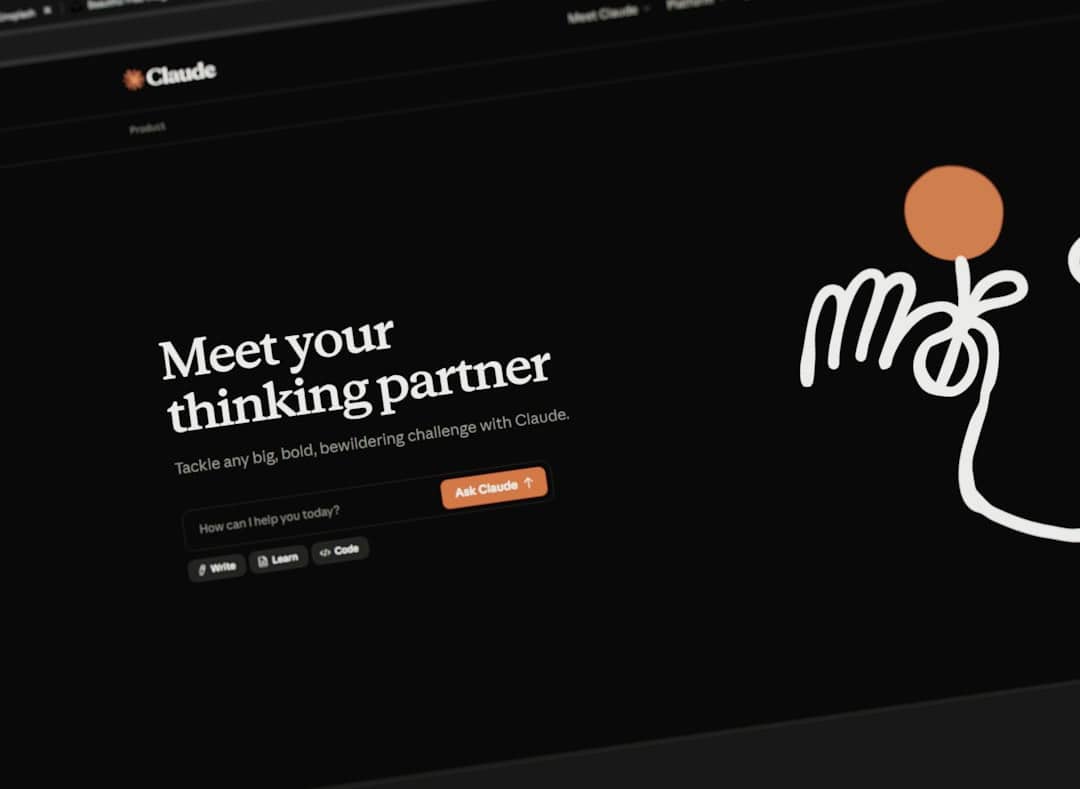
Anthropic just gave Claude a major upgrade: direct “connectors” to third-party services like Spotify, Uber, restaurant platforms, and tax software. In practical terms, that means you can now ask Claude to book a ride to the airport, queue up your flight playlist, reserve a table in Madrid, or pull in your tax documents — without manually jumping between apps.
This isn’t just another AI gimmick. For travelers — especially digital nomads and frequent flyers — it could fundamentally change how you plan, move, and manage life on the road in spring 2026.
Key Takeaways
- Claude now integrates directly with services like Uber, Spotify, restaurant booking platforms, and tax software.
- Travelers can complete multi-step tasks (e.g., book ride + dinner + playlist) in a single AI conversation.
- Connectors reduce app-switching — ideal for airport chaos and international travel.
- Financial integrations (like tax tools) are especially useful for digital nomads before April filing deadlines.
- Expect more travel brands (airlines, hotels) to join AI connector ecosystems later in 2026.
What Are Claude Connectors, Exactly?
Claude’s new connectors allow the AI to securely interact with external platforms. Instead of just giving you instructions (“Open Uber and book a ride”), Claude can now perform the action for you — within guardrails and with user permission.
Think of it as an AI operations layer sitting on top of your travel stack.
Current integrations include services across:
- Music streaming (e.g., Spotify)
- Ride-hailing (e.g., Uber)
- Restaurant reservations
- Financial and tax preparation software
- Other productivity and booking platforms
The key difference from older AI assistants? Context awareness across tools. Claude remembers your itinerary, preferences, and timing — then acts accordingly.
Why This Is Huge for Travelers in Spring 2026
We’re in peak shoulder season across Europe right now. Tulip fields in the Netherlands are in bloom, Easter festivals are wrapping up (see our guide to the best Easter destinations in Europe), and summer flight prices are starting to creep up.
This is when travel logistics get messy. And messy logistics are exactly where AI connectors shine.
1. Airport Mode: One Prompt, Multiple Actions
Imagine landing in Lisbon.
You type: “Get me to my hotel in Alfama, play my chill travel playlist, and book dinner nearby for 8pm.”
Claude can:
- Request your Uber to the hotel
- Start your Spotify travel playlist
- Reserve a table at a highly rated restaurant
No app juggling. No copy-pasting addresses. No switching between five screens while dragging a carry-on.
If you’ve ever tried to book a last-minute dinner during something like a San Sebastián pintxos crawl (we mapped out 12 must-visit spots here), you know how chaotic it can get.
Reducing friction matters.
2. Digital Nomad Tax Season Just Got Easier
April is tax crunch time in the U.S., and many expats and nomads are filing extensions or finalizing paperwork right now.
With connectors to tax software, Claude can:
- Pull in your income summaries
- Explain foreign earned income exclusions
- Flag missing documents
- Help estimate quarterly payments
If you’re working remotely from Patagonia during shoulder hiking season (our April–May guide to Torres del Paine is here), the last thing you want is spreadsheet chaos.
This is where AI goes from novelty to necessity.
3. Music + Movement = Mood Control
Travel is emotional. Delayed flights. Jet lag. Cultural overload.
Having AI that can instantly sync your context (“long layover,” “sunset train ride,” “hiking ascent”) with a playlist isn’t trivial. It’s comfort tech.
And because Claude remembers your preferences, it improves over time. It knows your “early flight calm” playlist isn’t the same as your “Friday in Barcelona” mix.

How This Compares to Google Assistant, Siri, and ChatGPT
We’ve seen integrations before. Siri can call an Uber. Google Assistant can control music. ChatGPT has plugins and actions.
But Claude’s pitch is different: deep reasoning + multi-step orchestration.
Instead of:
“Open Uber.”
“Play Spotify.”
“Find restaurant.”
You get:
“I land at 6:40pm, I’m staying near Plaza Mayor, I want something casual but authentic, and I need to be back early for a 7am train.”
Claude can interpret constraints, proximity, timing, and preferences in one flow.
That’s closer to a human travel assistant than a voice command bot.
Security and Privacy: Should Travelers Be Nervous?
Short answer: cautious, yes. Panicked, no.
Whenever AI connects directly to:
- Financial software
- Ride history
- Location data
- Music preferences (which reveal habits)
…you’re expanding your digital footprint.
For travelers who already rely on eSIMs, airport Wi-Fi, and public networks, this adds another layer.
Best practice in 2026:
- Enable two-factor authentication everywhere.
- Use a password manager (1Password and Bitwarden are still solid).
- Avoid connecting financial tools over public Wi-Fi without a VPN.
- Review connector permissions quarterly.
AI convenience shouldn’t mean blind trust.
Where This Gets Really Interesting: Trip Planning
Right now, connectors focus on lifestyle and productivity tools. But the obvious next step is:
- Airline APIs
- Hotel booking systems
- Train networks
- Travel insurance providers
Imagine planning your Eid al-Adha long weekend (we’ve rounded up easy getaway ideas here) and simply telling Claude:
“Three-day trip from Berlin under $800, minimal visa hassle, warm weather.”
Then it:
- Finds flights
- Books accommodation
- Schedules airport transfer
- Adds calendar blocks
- Builds a city playlist
We’re not fully there yet — but connectors are the foundation.

Who Benefits Most Right Now?
Not every traveler needs AI orchestration.
But these groups will feel it immediately:
1. Frequent Flyers
Anything that reduces friction between landing and hotel check-in is worth it.
2. Digital Nomads
Tax integrations + productivity syncing = fewer admin days.
3. Solo Travelers
AI becomes your logistics partner — especially helpful in unfamiliar cities.
4. Spring and Shoulder-Season Explorers
Weather variability (especially in April across Europe) means more last-minute changes. AI that can pivot quickly is useful.
What’s Still Missing?
Let’s be honest — this isn’t perfect.
Current limitations likely include:
- Regional availability (some services are U.S.-centric)
- Partial feature support (not every Uber option may be accessible)
- Learning curve for trust and permissions
Also, AI still makes contextual mistakes. Always double-check reservations and payment confirmations.
I wouldn’t yet trust it blindly with a multi-city, $3,000 itinerary.
Bottom Line: Is This Worth Using for Travel?
Yes — especially if you travel more than three times a year.
Claude’s connectors aren’t about novelty. They’re about compressing travel friction into a single intelligent layer.
In a world where:
- Airports are more crowded post-pandemic
- Spring 2026 travel demand is rebounding hard
- Digital nomad life blends work and movement
…having AI coordinate your ride, dinner, music, and paperwork isn’t lazy. It’s efficient.
We’re entering the era where your AI isn’t just answering questions — it’s running errands.
For travelers, that’s a big deal.
Frequently Asked Questions
What are Claude connectors?
Claude connectors are integrations that allow the AI to directly interact with third-party services like Uber, Spotify, restaurant platforms, and tax software. Instead of just giving instructions, Claude can complete tasks within those apps with your permission.
Can Claude book flights and hotels?
As of April 2026, connectors focus mainly on lifestyle, transportation, music, and financial tools. Direct airline and hotel booking integrations are not widely available yet, but they are a logical next step.
Is it safe to connect tax software to Claude?
Security depends on proper authentication and permissions. Use two-factor authentication, avoid unsecured public Wi-Fi, and regularly review connected app access to reduce risk.
How is this different from Siri or Google Assistant?
Claude emphasizes multi-step reasoning and context-aware orchestration. Instead of executing one command at a time, it can coordinate several related actions in a single conversation.

About the Author: Tomáš Bzirský
Founder and editor of Distratech. Based in the Czech Republic, travelling regularly from Central Europe. Writes practical travel guides and travel-tech comparisons (eSIM, apps, airports) in six languages.