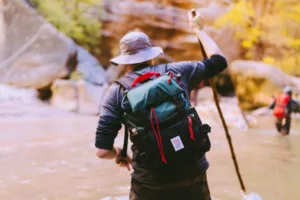
If you’re planning fall or winter travel—Europe by train, a US national park trip, or a festival weekend—you may be rethinking your backpack. I’ve tested dozens of travel packs over the past five years. The GoRuck GR1 is the one that keeps coming back on flights with me.
It’s not trendy, light, or cheap. But after another busy travel season, it remains one of the closest things to a “buy once, cry once” backpack I’ve used.
Key Takeaways
- The standard GoRuck GR1 starts around $335, while special fabrics and limited editions can cost substantially more.
- The current 21L and 26L models weigh approximately 1.27 kg and 1.41 kg, although weight varies by fabric and configuration.
- Its 1000D Cordura body, 210D back panel, YKK zippers, clamshell opening, and lifetime Scars warranty make it exceptionally durable.
- The padded laptop compartment can accommodate many 16-inch laptops, but the 26L is not guaranteed to qualify as a personal item on every airline.
- It is best for travelers who want one backpack for short trips, daily carry, the gym, and rucking—not ultralight travelers or chronic overpackers.
GoRuck GR1 Specs (And Why They Matter for Travel)
The GR1 still comes in two main sizes: 21L and 26L. The 21L is the safer choice for daily use and restrictive airline policies. The 26L offers noticeably more packing space and remains the better option for most travelers attempting 5–7 days from one backpack.
- Current starting price: Around $335 for standard Cordura versions; premium fabrics and collaborations cost more
- Capacity: 21L or 26L
- Approximate dimensions: 18 x 11.5 x 5.5 inches (21L) / 20 x 12 x 6.75 inches (26L)
- Approximate weight: 1.27 kg (21L) / 1.41 kg (26L), with variation between models
- Material: Typically a 1000D Cordura body with smoother 210D Cordura on the back panel and underside of the shoulder straps
- Laptop compartment: Fits many laptops up to a 16-inch MacBook Pro
- Zippers: YKK zippers with glove-friendly pulls
- Opening: Full clamshell
- Warranty: Lifetime Scars guarantee, subject to GoRuck’s coverage terms
Why this matters when you’re traveling: Even at approximately 1.4 kg, the 26L remains heavier than packs such as the Osprey Daylite 26+6. The difference is noticeable when an airline weighs cabin baggage. In return, you get a structured bag designed to handle abrasion, heavy loads, and years of being pushed under seats or thrown into train luggage racks.
Airline compliance also needs context. Both sizes fit within common US carry-on limits, but “carry-on” and “personal item” are not interchangeable. The 26L’s 20-inch height exceeds the published under-seat allowance of several low-cost carriers, particularly in Europe. A gate agent can require you to place it in a sizer even if it has fit under seats on previous flights.
Build Quality: Overkill for Most People (Perfect for Travelers)
The standard GR1 uses tough Cordura nylon and feels stiff when new. The current-generation 210D back panel is an important improvement over older all-1000D configurations: it is less abrasive against merino shirts, technical jackets, and bare skin while retaining a rugged 1000D body.
I’ve taken mine on:
- A 10-day Japan trip covering Tokyo, Kyoto, and Hiroshima
- Two European night-train journeys
- Multiple US domestic flights
- Beach trips involving sand and salt air
- Weighted walks and repeated gym sessions
After three years, it still looks nearly new. The fabric has softened, but the stitching, handles, and main zippers have remained solid.
Why this matters when you’re traveling: Bags tend to fail at the worst times—like when you’re rushing to catch the ÖBB Nightjet from Vienna to Paris (see our full breakdown of night trains in Europe in 2026). A separated zipper or torn shoulder strap in a sleeper cabin can derail a trip. The GR1’s large YKK zippers, reinforced stress points, and field-repair-oriented construction reduce that risk.
The Scars warranty adds long-term value, but it should not be interpreted as automatic free replacement for every type of damage. Manufacturing defects are generally covered, while cosmetic wear, misuse, alterations, and some repairs may be handled differently. Photograph the problem and check the current warranty terms before shipping the bag.
Laptop Protection: Surprisingly Good for Digital Nomads
The GR1 has a separate, heavily padded laptop compartment positioned against your back. The compartment is raised from the base, helping prevent the laptop from taking the full impact when the bag is set down.
I tested it with a 16-inch MacBook Pro weighing approximately 2.1 kg and a 14-inch ThinkPad X1 Carbon weighing approximately 1.12 kg. Both fit, although thick protective laptop cases can make the 16-inch fit tight when the main compartment is overpacked.
Why this matters when you’re traveling: If you work remotely from cafés or short-term rentals, protection matters more than decorative organization. A suspended compartment can help if the bag tips onto a hard floor, but it is not a substitute for sensible handling. Avoid packing hard objects directly against the laptop, and never place a ruck plate and computer in the same compartment.
The laptop compartment is also easiest to access when the bag is not stuffed completely full. Packing cubes should stop just below the zipper path so pressure from clothing does not bow the laptop or make the zipper difficult to close.
Comfort for Long Days: Airport + City + Gym
The shoulder straps are thick and dense rather than soft and spongy. They require a break-in period, but the foam resists flattening under heavier loads. The smoother back panel is comfortable against clothing, although it does not provide the ventilation of a suspended-mesh hiking pack.
I loaded the 26L with:
- 16-inch laptop
- iPad Pro
- Peak Design tech pouch weighing approximately 800 g when loaded
- Two days of clothes in packing cubes
- 750 ml water bottle
- Toiletry kit
Total carry weight was approximately 9.5 kg.
After six hours of airport delays and city walking, it remained stable and comfortable. It was not ultralight-hiking-pack comfortable, and my back became warm, but the bag did not sag or pull away from my shoulders.
Why this matters when you’re traveling: Airports and major train stations remain crowded in late 2026, and irregular operations can mean more standing and walking than expected. A structured pack feels controlled when moving through security or climbing stairs. For loads above approximately 9 kg, add a sternum strap and tighten the shoulder straps so the bag rides high.
There is no padded hip belt on the standard GR1. That keeps the exterior simple, but it also means almost all the weight sits on your shoulders. Travelers routinely carrying 12–15 kg may be more comfortable with a hiking-influenced travel pack that includes a proper load-bearing hip belt.
Rucking & Gym Use: A Travel Bag That Doubles as Fitness Gear
The GR1 was originally designed around rucking—walking with added weight—and its frame sheet helps stop the bag from collapsing under a 20 lb (9 kg) load.
A compatible ruck plate can be carried close to the back, but the standard GR1 does not secure plates as tightly as a dedicated Ruck Plate Carrier. Confirm plate dimensions before buying, stabilize the plate so it cannot shift, and do not carry a laptop at the same time. For running, obstacle events, or aggressive workouts, use purpose-built rucking equipment instead.
Why this matters when you’re traveling: If you’re on a long trip—say a month in Europe using eSIMs (compare options in our Europe eSIM cost breakdown)—you may not have consistent gym access. With the GR1, you can add controlled weight to a walk or use the bag for loaded squats, rows, and carries.
I’ve used it for:
- Weighted walks along Barcelona’s beachfront
- Stair climbs in Tokyo metro stations
- Hotel-room bodyweight circuits with added load
It can replace a separate gym bag and occasional rucking pack. Just remove the plate before flying: dense metal plates can trigger additional security screening and consume a large share of an airline’s cabin-weight allowance.
Packing for 5–7 Days: Can It Replace a Carry-On?
The 26L version opens flat, clamshell-style, which makes it much easier to pack than a conventional top-loading daypack.
I fit:
- 5 T-shirts
- 2 pairs of shorts
- 1 lightweight jacket
- 1 pair of sandals
- Underwear and socks for 6 days
- Small dopp kit
With compression packing cubes, that works for approximately one week in a warm climate. Cold-weather travel is more challenging because shoes, knitwear, and insulated layers quickly overwhelm 26 liters. Wearing the bulkiest layer in transit and planning one laundry stop is more effective than forcing in an extra outfit.
Why this matters when you’re traveling: Avoiding checked luggage can save checked-bag fees and reduce time spent at baggage claim. More importantly, staying mobile helps in busy transport hubs. In scam-heavy regions (see our guide to common Southeast Asia travel scams), carrying one compact bag can make it easier to keep your belongings in sight.
The internal organization is intentionally simple: a large main compartment, mesh pockets, MOLLE webbing, and a quick-access area on current configurations. Packing cubes are close to essential. Use one medium cube for clothing, one slim pouch for cables, and the internal zip pockets for flat items. Avoid filling every pocket before the main compartment; doing so creates awkward bulges and reduces usable space.
Festival Use: Check the Bag Policy Before You Go
The GR1 is durable enough for dusty campsites, wet grass, and crowded public transport, but that does not mean it will be admitted through every festival gate. Many venues now impose strict size limits, ban full-size backpacks, or require clear bags inside the event area.
For camping festivals, the 26L works well as a transport and campsite bag if larger equipment is carried separately. For a single-day festival, the 21L may still exceed the permitted size. Check the organizer’s current policy shortly before departure, not just when buying the ticket.
The Cordura fabric resists light rain, but the GR1 is not waterproof and its zippers are not watertight. Put electronics, medication, and travel documents in waterproof pouches or resealable bags. After exposure to mud, salt, or spilled drinks, hand-clean the pack with mild soap and let it air-dry completely.
What I Don’t Like (Be Honest Before You Buy)
1. It’s still heavy.
At approximately 1.27–1.41 kg before packing, the standard GR1 uses a meaningful portion of strict cabin-baggage allowances. If you prioritize ultralight travel, skip it.
2. No built-in water bottle pocket.
You must carry a bottle internally or attach a MOLLE-compatible pouch. Internal storage looks cleaner but increases the consequences of a leaking cap.
3. It’s expensive.
The standard Cordura model starts around $335, and premium materials can push the price higher. Approximate prices at the time of this October 2026 update include:
- Osprey Farpoint 40: around $185
- Peak Design Travel Backpack 30L: around $230
- Decathlon NH Escape 500 23L: around $60
4. Ventilation is limited.
The flat back panel is smooth and durable, but it becomes warm during humid city walks. A technical hiking pack with a ventilated frame performs better in hot weather.
5. The design can feel too tactical.
The boxy shape and exterior MOLLE webbing are functional, but they are not ideal for travelers who want a subtle office or business-travel aesthetic.
Why this matters when you’re traveling: If you lose the bag, $335 hurts more than $60. If you travel infrequently, routinely face 7 kg cabin limits, or prefer highly organized interiors, the long-term durability may not justify the compromises.
GR1 vs Alternatives: What Travelers Should Actually Buy
GR1 vs Peak Design Travel Backpack 30L (Around $230)
The Peak Design has more built-in organization, external bottle pockets, and a cleaner camera-travel aesthetic. At roughly 1.44 kg, it is not meaningfully lighter than the 26L GR1.
Buy Peak Design if: You carry camera gear, want bottle pockets, and prefer more compartments.
Buy GR1 if: You prioritize abrasion resistance, simple packing space, and rucking capability.
GR1 vs Osprey Farpoint 40 (Around $185)
The Farpoint 40 weighs roughly 1.6 kg, so it is not lighter than the GR1 26L. However, it provides significantly more capacity, a supportive harness, and a hip belt designed for heavier travel loads.
Buy Farpoint if: You need 35–40L, carry heavier loads, or travel with cold-weather clothing.
Buy GR1 if: You want a smaller bag for travel, daily use, the gym, and occasional rucking.
GR1 vs Budget Packs ($50–$100 Range)
Budget packs are often lighter and may offer more pockets, but fabric, zipper, foam, and stitching quality vary widely. A less expensive bag is still the sensible choice if you travel only once or twice a year.
Traveler math: If a $90 bag lasts three years and the GR1 lasts a decade or more, the annual cost can become similar. That calculation only works if you genuinely keep using the GR1 rather than replacing it for aesthetic reasons.
Who Should Buy the GoRuck GR1?
Buy it if you:
- Travel at least four times per year
- Work remotely and carry a 14- to 16-inch laptop
- Prefer a minimalist, one-bag setup
- Want one backpack for commuting, flights, the gym, and weighted walks
- Value repairability and durability more than low weight
Skip it if you:
- Travel once a year
- Frequently fly with strict 7 kg cabin limits
- Prefer ultralight or highly ventilated gear
- Need 35L or more on most trips
- Want built-in bottle pockets and extensive organization
Traveler Verdict: Is the GoRuck GR1 Worth $335?
Yes—with important caveats.
If you want the lightest, cheapest, or most feature-packed travel bag, this is not it. If you want one backpack that can handle flights, commuting, city exploring, gym sessions, and controlled weighted workouts, the GR1 remains one of the strongest do-it-all options available in late 2026.
The 26L is my recommendation for one-bag trips and larger users. The 21L is better for commuting, short trips, smaller frames, and travelers trying to remain closer to airline personal-item limits. Neither size is automatically compliant with every carrier, so always compare the packed bag with the airline’s published dimensions and weight allowance.
My recommendation: Choose a standard Cordura model unless you have a specific reason to pay more for a premium fabric. Add a sternum strap for rucking or heavier travel loads, use packing cubes, and carry liquids in a sealed pouch.
Buy it once, maintain it properly, and it should remain useful for years.
Frequently Asked Questions
Is the GoRuck GR1 carry-on compliant?
Both versions fit within common full-size carry-on limits, but personal-item compliance depends on the airline. The 21L is the safer under-seat option. The 26L measures approximately 20 inches tall and can exceed the published personal-item dimensions of low-cost carriers, especially when fully packed.
How much weight can the GR1 handle?
The GR1 is built for heavy loads and can carry a 20 lb (9 kg) ruck plate or approximately 10–15 kg of travel gear. Comfort is more limiting than construction because the standard bag lacks a load-bearing hip belt. Secure plates carefully and never pack a plate against a laptop.
Is the GoRuck GR1 worth it for one-bag travel?
For trips of up to 5–7 days, particularly in warm climates, the 26L can work very well. It opens clamshell-style, protects laptops, and withstands rough handling. It is less appealing for travelers facing strict weight limits or needing extensive organization.
What’s the difference between the 21L and 26L GR1?
The 26L is approximately two inches taller and provides more room for clothing, shoes, and cold-weather layers. It generally suits taller users and one-bag trips. The 21L is easier to use as an everyday backpack and is a better choice for smaller frames or restrictive airline policies.
Is the GoRuck GR1 waterproof?
No. Cordura provides useful resistance to abrasion and light rain, but the seams and zippers are not waterproof. Use a waterproof pouch or internal dry bag for electronics, medication, passports, and other sensitive items.
Can you take the GR1 into a music festival?
It depends on the event. Many festivals prohibit full-size backpacks or require clear bags within the venue. The GR1 is useful for travel and campsite storage, but you should verify the festival’s current size and security rules before arrival.
Final Thoughts
The GoRuck GR1 is not flashy, ultralight, or packed with travel-specific features. Its strengths are simpler: dependable materials, a protective laptop compartment, a stable carry, and enough versatility to serve as a travel bag, work bag, gym bag, and occasional rucking pack.
It is the bag you grab when you do not want to worry about your bag. When navigating crowded airports, wet train platforms, festival campsites, and unfamiliar cities, that reliability is often worth more than another pocket or a few hundred grams of weight savings.

About the Author: Tomáš Bzirský
Founder and editor of Distratech. Based in the Czech Republic, travelling regularly from Central Europe. Writes practical travel guides and travel-tech comparisons (eSIM, apps, airports) in six languages.