Updated September 27, 2026: Northern Hemisphere summer has ended, but heat, wildfire smoke, flooding and Atlantic storms can still disrupt autumn trips. El Niño is only one influence on these hazards, so travellers should use current local forecasts and official warnings rather than treating the climate pattern as a destination-specific prediction.
Summer 2026 brought another reminder that weather resilience now matters when planning beach days in Greece, road trips through California and cruises around the Galápagos. El Niño can shift rainfall, temperature and storm patterns worldwide, but it does not automatically produce extreme weather in every region—or explain every individual heatwave, fire or hurricane.
If you’re booking an autumn or winter trip now, this isn’t panic time. It’s strategy time. Here’s what El Niño-related climate variability can mean for your trip, which risks continue beyond summer, and how to plan without overreacting to a seasonal headline.
Key Takeaways
- Southern European heat can continue into September, but El Niño alone cannot predict a 40°C (104°F) event in Spain, Italy or Greece. Follow short-range national weather alerts.
- Western U.S. wildfire and smoke disruptions can extend into autumn; travel insurance with relevant natural-disaster and trip-interruption cover typically costs about $70–$150 for a moderately priced trip.
- El Niño is associated with heavier rain on parts of the Peru and Ecuador coast, especially during its locally strongest periods, but Galápagos conditions vary by island and week.
- Flexible fares can cost $40–$120 more, but that may still be cheaper than last-minute rebooking fees or a large same-day fare difference.
What El Niño Actually Changes for Summer Travel
El Niño is the warm phase of the El Niño–Southern Oscillation, or ENSO. It begins with unusually warm surface water in the central and eastern equatorial Pacific and can alter atmospheric circulation, rainfall and temperature patterns around the world.
Its travel effects are not uniform. The strongest and most predictable connections occur in particular regions and seasons. Southern European heat, for example, is influenced by local pressure systems, soil moisture, long-term warming and marine temperatures; it should not be attributed to El Niño alone. Likewise, ENSO changes the background odds of some weather patterns but cannot tell you whether a specific city will be dangerously hot on a particular day.
Travellers should separate three kinds of information:
- Seasonal outlooks describe whether a broad region may be warmer, cooler, wetter or drier than average over several months.
- Short-range forecasts are more useful for deciding when to hike, drive or take a ferry.
- Official warnings should determine whether you change plans because of heat, fire, flooding, wind or poor air quality.
Flights are only part of the problem. Heat closures, wildfire smoke, rail speed restrictions, ferry cancellations and flash flooding can disrupt an itinerary even when the airport remains open.
Mediterranean Heatwaves: Greece, Italy, Spain
September can still be hot around the Mediterranean, although the likelihood of prolonged extreme heat generally falls as autumn progresses. For future July and August trips, build your schedule around extreme heat episodes rather than assuming every day will follow the monthly average.
What that means on the ground:
- Archaeological sites may alter hours or temporarily close during severe heat. Check the official attraction website on the morning of your visit.
- Walking tours, boat excursions and outdoor activities may be rescheduled when heat, wind or fire-danger thresholds are reached.
- Access to forests, parks, beaches and hiking routes can be restricted on very-high fire-risk days.
- Trains and ferries can experience delays during extreme heat or strong winds, even when services are not fully cancelled.
Smart move: Reserve outdoor sightseeing for the first available morning slot, plan an indoor break during the hottest part of the day and keep evening activities flexible. In a heat warning, do not rely on a fixed “safe” time—temperatures can remain dangerous after 5:00 pm.
In Rome, standard adult entry to the Colosseum archaeological park generally starts around €18 before optional reservation or tour charges, while guided experiences commonly cost €45–€80. Prices, access areas and entry rules vary by product, so compare the official ticket inclusions rather than choosing solely by the headline price.
If you’re planning multi-city travel in Italy, high-speed trains are often easier than rental cars during heatwaves. Air-conditioned Frecciarossa services from Rome to Florence take roughly 1h30, with advance fares often around €25–€70, although flexible and last-minute tickets can cost more. Check schedules and current fares through Trenitalia. A rental car can add daily hire charges, fuel, tolls, parking and restricted-traffic-zone risks.
For a full breakdown of Italian train logistics, see our guide on how to travel Italy by train in 7 days.
Skip This, Do This Instead
Skip: Midday hikes in Cinque Terre during a heat warning or on a trail-closure day.
Do instead: Take an early train or seasonal ferry between villages, confirming sea conditions, operating dates and the day’s timetable before departure. Ferry day passes and route pricing vary by operator and season.
Skip: An unshaded city Airbnb without clearly documented air conditioning.
Do instead: Book accommodation with room-level AC, recent summer reviews and a cancellation policy you can use. Central Barcelona rooms can exceed $200–$350 per night during busy dates, but rates fall substantially outside major events and peak summer weekends.
U.S. West Coast: Wildfires and Road Trip Disruptions
Wildfire season in California, Oregon and Washington does not end neatly with summer. Dry vegetation and offshore wind events can keep fire and smoke risks elevated into autumn. Conditions can also change quickly: a destination may have clear skies while an access road or neighbouring region experiences hazardous smoke.
Yosemite’s standard private-vehicle entrance fee has typically been $35 for seven days, but reservation requirements, road access and seasonal services can change. Tioga Road is also a high-elevation seasonal route: fire, snow, storms or operational issues can close it, and some detours add several hours. Confirm conditions with the National Park Service immediately before driving.
Here’s how transport options compare during volatile conditions. These are planning ranges rather than guaranteed fares:
| Option | Typical LA to SF Cost | Typical Time | Weather Disruption Exposure |
|---|---|---|---|
| Rental Car | $70–$150/day, plus fuel and possible one-way fees | 6–8 hrs without major stops | High when roads close; route can be changed |
| Amtrak | About $60–$130 | Roughly 10–12+ hrs, depending on service | Medium; smoke, heat and infrastructure issues can delay trains |
| Flight | About $80–$220 | About 1h30 in the air | Lower on clear days, but smoke and airport disruption remain possible |
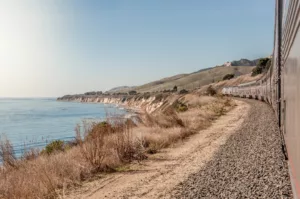
Flights are usually fastest, while a car provides the most control if only one road is affected. Rail can reduce driving stress, but it is not immune to fire-related closures or delays. For road trips, save at least two inland alternatives and avoid relying on a single coastal or mountain route.
Insurance tip: A comprehensive policy may cost roughly 4–8% of the prepaid, non-refundable trip total. Check the wording for “natural disaster,” “travel delay,” “trip interruption” and evacuation. Coverage normally depends on when the event became known: buying a policy after a fire or storm is named or forecast may be too late. Providers such as World Nomads and Allianz offer multiple policy levels, but exclusions and limits matter more than the brand name.
Before setting out, check the state transport agency, park alerts and an air-quality source. An AQI reading can differ significantly across a region, and an ordinary cloth or surgical mask does not provide the same smoke-particle protection as a well-fitted N95 or equivalent respirator.
Peru, Ecuador & the Galápagos: Heavier Coastal Rains
El Niño can bring unusually warm coastal waters and heavier rain to parts of Peru and Ecuador. However, the timing and severity vary, and the strongest coastal impacts do not necessarily coincide with the Northern Hemisphere’s July–August holiday period. Travellers should monitor regional flood, road and marine forecasts rather than assuming the entire country is affected.
Galápagos cruises of seven nights commonly range from roughly $2,500 for limited budget inventory to $6,000 or more per person on many mid-range and expedition itineraries, before international flights and, in some cases, park-related fees. Weather or sea conditions can lead to altered landing sites and activity schedules rather than a full cancellation.
Land-based island hopping offers more control over accommodation dates, but transfers remain weather-dependent:
- Inter-island speedboats: commonly about $35–$50 each way, with journeys of approximately two to three hours.
- Day tours: often $150–$300 or more, depending on the route, vessel, equipment and inclusions.
- Hotels in Puerto Ayora: approximately $80–$300 per night, with luxury properties costing considerably more.
Pack medication for seasickness if appropriate, protect electronics in a dry bag and leave a buffer before an international flight. A speedboat arrival and long-haul departure on the same day creates avoidable risk.
Wildlife viewing remains a major reason to visit, but conditions differ by month and island. Confirm what your fare includes—domestic flights, transfers, equipment, guide services and park charges can materially change the final price.
If you’re connecting through the U.S. and dealing with visa wait times, verify all government fees and appointment services directly before paying for any third-party assistance. For context on the previously reported expedited option, see this U.S. visa fast-track breakdown.
Caribbean & Atlantic: Stronger Storm Potential
Atlantic hurricane season runs from June 1 through November 30, with activity historically peaking around September. That means the storm risk remains directly relevant as of this September 27 update.
El Niño often increases upper-level wind shear over the tropical Atlantic, which can suppress some hurricane development. But it does not eliminate risk, and other factors—including exceptionally warm ocean water, atmospheric moisture and short-term wind patterns—can counteract or outweigh that influence. Never use the ENSO label as a reason to skip storm preparation.
For a representative NYC–Cancún trip, the difference between restrictive basic economy and a standard main-cabin fare may be $50–$150 round-trip. Policies vary: “no change fee” often means you still pay a fare difference, and basic economy may offer little or no voluntary flexibility.
- Check whether a weather waiver covers your exact origin, destination and travel dates.
- Do not cancel before reading the airline’s waiver; cancelling too early can reduce your options.
- Keep airline, hotel and insurer notifications enabled during the week before departure.
- Allow extra time before a cruise, preferably arriving at least one day before embarkation.
Resort tip: Choose properties with a clearly written hurricane policy and refundable terms. Some Caribbean and Cancún resorts allow free cancellation until several days before arrival, while discounted rates may be fully non-refundable. Mid-range beachfront stays can run from roughly $220 to more than $500 per night depending on dates, occupancy and meal plan.
Smart Booking Strategy for an El Niño Summer
For the remainder of 2026—and for future warm-season trips—prioritize recoverability over the lowest possible upfront price.
- Book morning activities. Heat and thunderstorms often intensify later, although local forecasts should always take priority.
- Add at least one buffer day. This is especially important before cruises, island transfers, weddings and non-refundable international flights.
- Compare fare rules, not labels. A “flexible” ticket may waive the change fee while still requiring an expensive fare difference.
- Download weather and air-quality apps. Windy, IQAir AirVisual and MyRadar can be useful, but official emergency agencies should remain your primary source.
- Verify cooling. Look for room-level AC, recent guest reviews, blackout curtains and any limits on operating hours.
- Save documents offline. Keep policy numbers, booking references, passport copies and emergency contacts available without mobile service.
- Document disruption costs. Save screenshots, alerts and itemised receipts if you intend to submit an insurance claim.
Flexible fares can cost approximately $40–$120 more, although the premium varies widely by route and airline. The best comparison is the flexible-fare premium versus the value of the bookings you could lose—not a generic rebooking-fee estimate.
Also check what your credit card provides. Card benefits may cover only trips paid with that card and often have narrower triggers or lower limits than standalone insurance.
Where It Might Actually Be Better Than Usual
Not all weather impacts are negative, but no destination is guaranteed to benefit from El Niño.
Scandinavia can offer comfortable alternatives to Mediterranean heat, particularly outside midwinter. In Tromsø, the midnight-sun period ends in late July, so travellers visiting after September should instead plan for rapidly shortening days and the start of aurora-season conditions. Summer daytime temperatures are often mild, but rain, wind and sudden cold remain possible.
Peak-summer hotel prices in Tromsø can range from around $180 to more than $350 per night, while autumn rates depend heavily on northern-lights demand and weekend dates. Compare that with Santorini, where premium caldera-view rooms can cost well above $350 during busy periods even when extreme heat affects daytime sightseeing.
Northern Japan, including Hokkaido, is generally cooler than Tokyo during midsummer, making it a useful heat-avoidance option. By late September, however, travellers should prepare for cooler evenings and changing autumn conditions rather than summer heat. Tropical systems can still affect Japanese flights and rail services, so refundable connections remain valuable.
Is This a Summer to Cancel Your Trip?
No—not solely because of El Niño. A climate phase is not, by itself, a reason to cancel a specific itinerary.
Change plans when destination-level evidence supports it: an official evacuation order, an airline waiver, an attraction closure, hazardous air quality, a severe heat warning or a transport shutdown. Check your insurer before voluntarily cancelling, because fear of bad weather is rarely a covered reason under standard policies.
Build a contingency reserve of roughly 5–10% for transport changes, extra accommodation and meals. On a $4,000 trip, that means keeping $200–$400 accessible, ideally on more than one payment method.
Prioritize early starts, climate-controlled transport, refundable bookings and destinations with multiple transport links. For autumn 2026 travel, continue monitoring Atlantic storms, Western wildfire conditions and Mediterranean flood or heat alerts close to departure.
You can still experience Santorini sunsets, Pacific Coast views or Galápagos wildlife. The practical difference is having a backup route, a usable cancellation policy and enough schedule space to respond when conditions change.
Frequently Asked Questions
Will El Niño affect travel to Europe in summer 2026?
El Niño may influence broad climate patterns, but it cannot reliably predict a particular European heatwave. For future summer trips to Spain, Italy and Greece, plan for extreme heat while following national meteorological warnings and destination-specific forecasts.
Is it safe to visit California during wildfire season?
Often, yes, but conditions can differ sharply by location and change quickly. Check fire maps, park and highway closures, evacuation notices and air quality each day. Insurance must usually be purchased before a fire becomes a known event to cover related disruption.
Does El Niño increase hurricanes in the Caribbean?
Usually not. El Niño often increases Atlantic wind shear, which can inhibit hurricane formation, but it never removes the risk. Warm ocean water and other atmospheric conditions can still support dangerous storms throughout the June–November season.
Should I pay extra for flexible flights this year?
It can be worthwhile for weather-exposed or tightly timed trips. Read the rules carefully: a waived change fee does not necessarily remove the fare difference, and refunds may be limited to airline credit.
What should I check 72 hours before departure?
Review official weather warnings, airline waivers, road or rail closures, air quality, ferry status and your accommodation’s cancellation deadline. Save confirmation numbers and insurer contact details offline.

About the Author: Tomáš Bzirský
Founder and editor of Distratech. Based in the Czech Republic, travelling regularly from Central Europe. Writes practical travel guides and travel-tech comparisons (eSIM, apps, airports) in six languages.