


Granada: A Magical Journey Through Spain’s Moorish Past
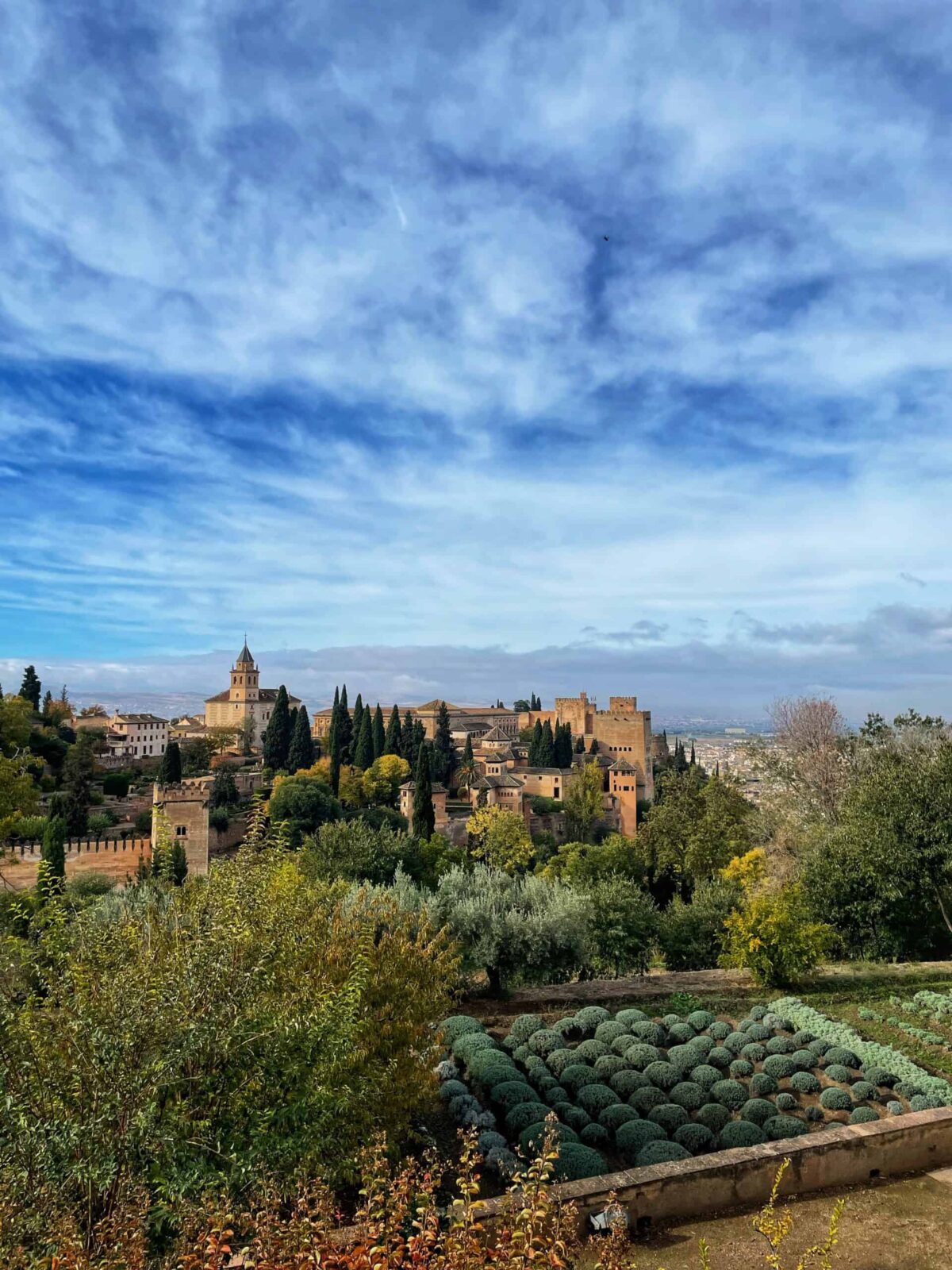
Granada, a captivating city in Andalusia, offers a rich blend of history, culture, and stunning landscapes. The Alhambra, a UNESCO World Heritage Site, is the crown jewel of Granada, with its exquisite Moorish architecture, lush gardens, and panoramic views over the city and the snow-capped Sierra Nevada. Wander through the Albaicín, the city’s ancient Arab quarter, where narrow whitewashed streets reveal hidden plazas, cármenes (walled garden houses) and charming tapas bars. Don’t miss the breathtaking sunset from Mirador de San Nicolás (arrive at least 45 minutes early in high season, or try the quieter Mirador de San Miguel Alto a little further uphill), and be sure to indulge in Granada’s famous tapas culture – this is one of the last cities in Spain where a free tapa still arrives with every drink you order. Granada is a true Spanish gem, promising an unforgettable journey through its enchanting past.
Getting there and around (updated for 2026): Granada is now well connected by high-speed AVE trains – roughly 3 hours 15 minutes from Madrid and around 1 hour 20 minutes from Málaga María Zambrano. Federico García Lorca Granada-Jaén Airport sits about 17 km west of the city with a shuttle bus into the centre. If you arrive by car, be aware that Granada operates a low-emission zone (ZBE) covering the historic centre, with camera-enforced restrictions on non-resident vehicles. The safest option is to leave your car in a public underground garage (Parking San Agustín, Parking Puerta Real or Parking Alhambra) and explore on foot. The Albaicín and Sacromonte are served by the small C31, C32 and C34 minibuses, and the C30 and C32 lines run from Plaza Isabel la Católica up to the Alhambra ticket office for around €1.40 per ride.
Best time to visit: Spring (March–May) and autumn (late September–November) remain the sweet spots, with mild temperatures and the Generalife gardens in bloom or autumn colour. July and August regularly exceed 38–40 °C, so plan Alhambra visits for the first morning slot. Winter is surprisingly pleasant for sightseeing and lets you combine the city with skiing in the Sierra Nevada, whose season normally runs from early December to mid-April – the resort is only about 35 minutes’ drive from the centre. Avoid Holy Week (Semana Santa) and the Corpus Christi fair in early June unless you specifically want the festivities, as accommodation prices double and the Alhambra sells out weeks ahead.
Where to stay in Granada? During our stay in Granada, we lodged at Limehome Granada Calle Santa Ana, which is located at the center of the city, right at the foot of the Alhambra hill and a two-minute walk from Plaza Nueva, and offers parking facilities. However, a parking house is required to use, and you will need it anyway because of the low-emission zone. One of the great advantages of Limehome is that it offers a self-check-in process via a digital code, so late arrivals are no problem. The rooms are spacious and comfortable, with a small kitchen that is handy for breakfast. If you prefer other accommodations – for example a traditional carmen in the Albaicín or one of the boutique hotels that have opened around Calle Elvira and the Realejo in the last couple of years – you can check out the available options on booking websites below. Book at least 4–6 weeks in advance for spring and autumn weekends.
Alhambra: Spain’s Moorish Masterpiece
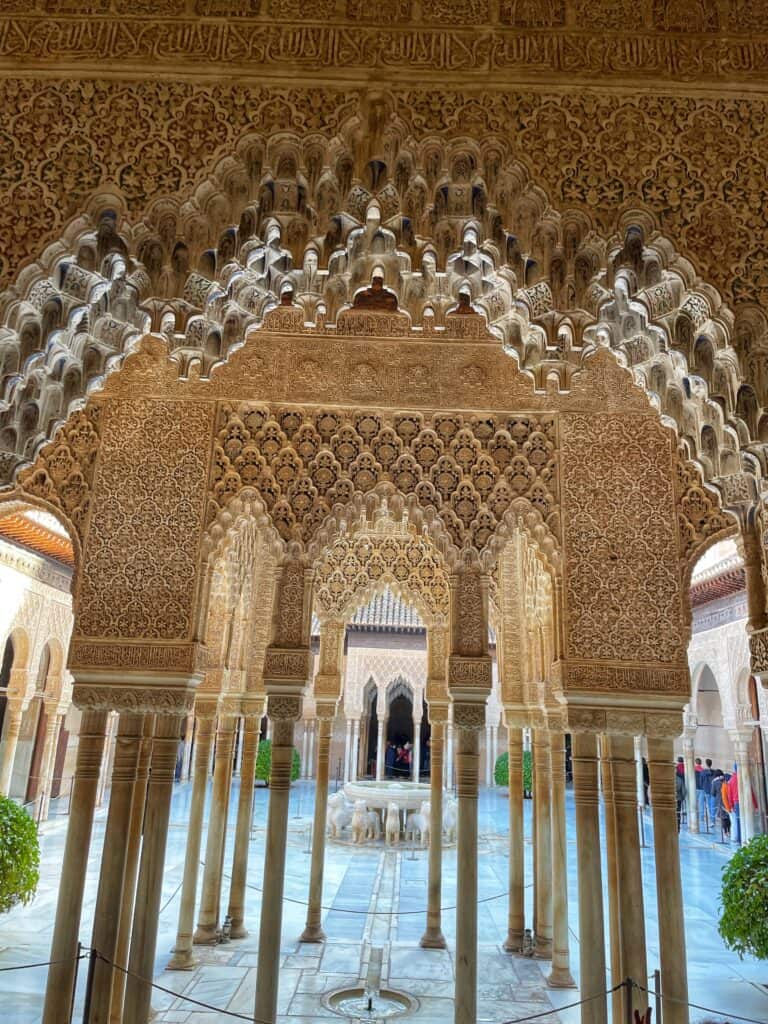
The Alhambra, a UNESCO World Heritage Site in Granada, is a testament to Spain’s rich Moorish heritage. This architectural gem features stunning palaces, courtyards, and gardens built mainly by the Nasrid dynasty between the 13th and 15th centuries. Explore the Nasrid Palaces (Palacios Nazaríes) with the Court of the Lions and the Hall of the Ambassadors, climb the towers of the Alcazaba fortress for the best view of the Albaicín, marvel at the intricate stucco and tilework, and wander through the lush Generalife gardens and summer palace. The Renaissance Palace of Charles V, with its unexpected circular courtyard, and the small Alhambra Museum inside it (free entry) round off the visit. The Alhambra, a symbol of Spain’s diverse past, offers a mesmerizing journey through history and art.
This place is truly amazing! We highly recommend purchasing your tickets well in advance and opting for a morning visit to avoid the crowds of tourists and school students. Since our first visit the ticketing rules have tightened considerably, so here is what you need to know in 2026:
- Tickets: Buy only from the official Patronato de la Alhambra website (tickets.alhambra-patronato.es). The “Alhambra General” ticket, which includes the Nasrid Palaces, Alcazaba and Generalife, costs around €19–20; “Gardens, Generalife and Alcazaba” tickets (no Nasrid Palaces) are cheaper, and under-12s enter free but still need a ticket. Tickets go on sale several months ahead and the Nasrid Palaces regularly sell out 3–6 weeks in advance in spring, autumn and over holidays. If the official site is sold out, guided tours with a licensed guide are usually the only remaining way in – see the tours widget below.
- Nominal tickets and ID: Every ticket is issued in the visitor’s name. You must carry the passport or ID card used at purchase; it is checked at the entrance to the Nasrid Palaces and the Generalife, and tickets cannot be transferred or resold.
- Your time slot matters: Only the Nasrid Palaces have a fixed entry time, enforced to the minute – miss your 30-minute window and you will not be let in. You can visit the rest of the complex at any point during your morning (8:30–14:00) or afternoon (14:00–18:00 in winter, 14:00–20:00 in summer) session. Allow 3–4 hours in total and at least 20 minutes to walk from the main entrance to the palaces.
- Night visits: The illuminated night tour of the Nasrid Palaces (Tuesday–Saturday evenings) is a magical, far less crowded alternative, and can be combined with a daytime garden ticket the following day.
- Dobla de Oro: This combined ticket adds the Moorish monuments of the Albaicín (Bañuelo baths, Casa de Zafra, Palacio de Dar al-Horra, Casa Horno de Oro, Corral del Carbón) for only a few euros more and is excellent value if you have two days.
The Alhambra boasts a spacious paid parking area near the main entrance and the Generalife (open from around 8:00, roughly €3 per hour, with a daily maximum), and it lies outside the city’s low-emission zone. Note that the main ticket office and the Generalife entrance are at the top of the hill, while the Justice Gate (Puerta de la Justicia) below is a shorter walk from the Albaicín and Plaza Nueva via the beautiful Cuesta de Gomérez – both entrances accept e-tickets on your phone, so there is no longer any need to queue for a printed ticket.


Beyond the Alhambra: What Else to See in Granada
Give Granada at least two full days. On the second day, visit the Cathedral and the adjoining Royal Chapel (Capilla Real), where the Catholic Monarchs Isabella and Ferdinand are buried; a combined ticket is available and the chapel is best seen first thing in the morning. Browse the spice stalls of the Alcaicería, the old silk market, then cross the river Darro along the Carrera del Darro – arguably the prettiest street in Spain – to the Albaicín. In the evening, head to the cave district of Sacromonte for a zambra flamenco show (book ahead; the small cave venues hold only 40–60 people), or soak in the Hammam Al Ándalus Arab baths near Plaza Nueva, which should be reserved several days in advance.
For tapas, start on Calle Navas or Calle Elvira in the centre, then graduate to the local favourites around Plaza de la Romanilla and the Realejo quarter. Order a caña (small beer) or a glass of local wine, and a tapa arrives free – the second and third rounds usually bring something more substantial. Expect to pay around €2.50–3.50 per drink in 2026. Typical Granada dishes to look out for are habas con jamón (broad beans with ham), piononos pastries from Santa Fe and the cured ham from Trevélez in the nearby Alpujarras.
Key Takeaways
- Book Alhambra tickets on the official Patronato website as soon as your dates are fixed – the Nasrid Palaces sell out weeks ahead, and tickets are nominal, so bring the ID you booked with.
- Choose the first morning slot (8:30) or a night visit to enjoy the palaces with the fewest crowds, and allow 3–4 hours for the whole complex.
- Granada’s historic centre is a low-emission zone: park in a public garage or at the Alhambra car park and explore on foot or by minibus.
- Spring and autumn offer the best weather; winter combines sightseeing with Sierra Nevada skiing, while midsummer heat makes early starts essential.
- Plan two days to also fit in the Albaicín, the Cathedral and Royal Chapel, Sacromonte flamenco and Granada’s legendary free tapas.
Frequently Asked Questions
How much does an Alhambra ticket cost in 2026?
The Alhambra General ticket (Nasrid Palaces, Alcazaba, Generalife) costs around €19–20 on the official site. Gardens-only and night-visit tickets are slightly cheaper, and children under 12 enter free with a ticket. Guided tours from third-party providers cost more but are often the only option once official tickets are sold out.
How far in advance should I book the Alhambra?
For spring, autumn, Easter and public holidays, book 1–2 months ahead. In quieter periods (late January, February, November) a week or two is usually enough, but the Nasrid Palaces are always the first to sell out.
Can I visit the Alhambra without a ticket?
Yes, partially. The grounds, the Palace of Charles V, the Alhambra Museum and the Fine Arts Museum, as well as the walk up through the Alhambra woods, can be visited free of charge. The Nasrid Palaces, Alcazaba and Generalife require a paid ticket.
Is Granada worth visiting in winter?
Absolutely. Daytime temperatures are typically 12–16 °C, the Alhambra is far less crowded, hotel prices drop and the snow-covered Sierra Nevada provides a stunning backdrop – or a ski day only 35 minutes away.
How many days do I need in Granada?
Two full days is the ideal minimum: one for the Alhambra and Generalife, one for the Albaicín, Cathedral, Royal Chapel and Sacromonte. A third day allows a trip to the Alpujarras villages or the Sierra Nevada.
Where to go next? Malaga!

About the Author: Tomáš Bzirský
Founder and editor of Distratech. Based in the Czech Republic, travelling regularly from Central Europe. Writes practical travel guides and travel-tech comparisons (eSIM, apps, airports) in six languages.