


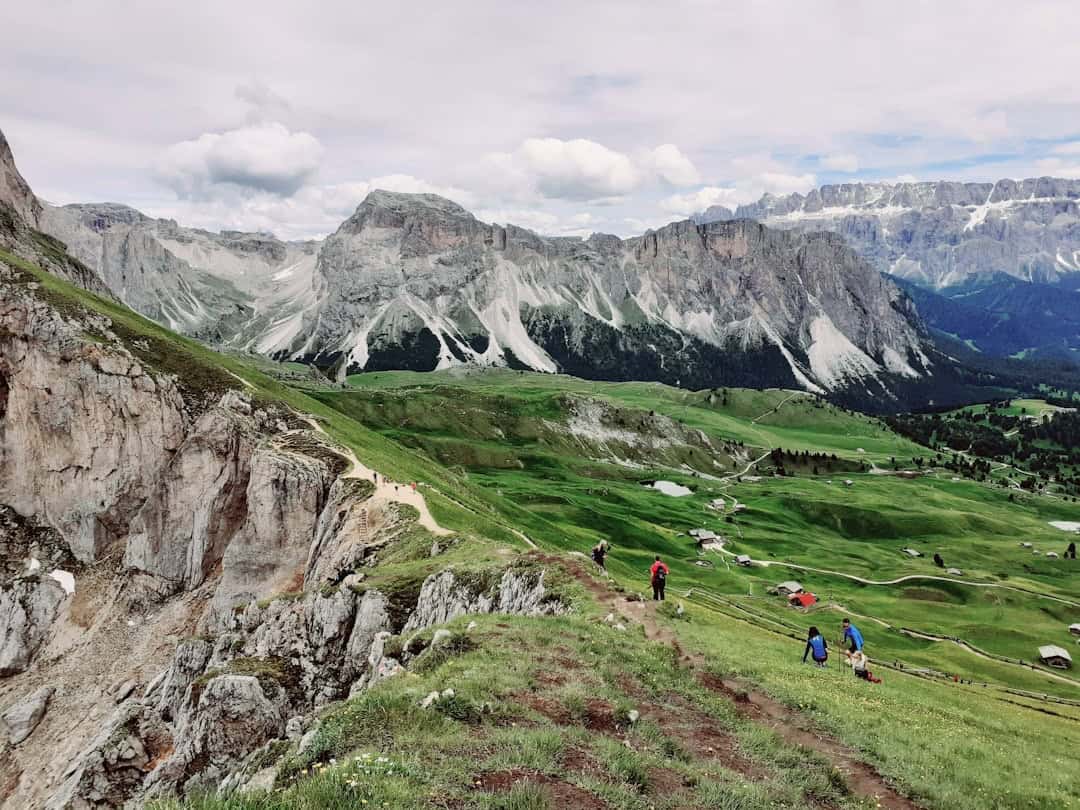
I’ve hiked the Dolomites in peak July heat, squeezed between tour groups and tour buses. I’ve also hiked them in May — crisp air, empty trails, snow still dusting the peaks — and I’ll never go back to summer.
May is the sweet spot. Cable cars are just starting to reopen, rifugi begin their season, and you can walk for hours without hearing anything but cowbells and your own boots on gravel.
This guide has been refreshed for the May 2027 season, with updated prices, access rules and a few lessons from the post-Olympics year in Cortina. If you’re planning a spring trip, now is the time to lock in accommodation — the best-value rooms in May disappear by February.
Key Takeaways
- Mid-to-late May offers mostly snow-free trails below 2,200m with a fraction of the hikers you’ll see June–September.
- Expect daytime temps of 10–18°C (50–64°F), chilly mornings around 3–6°C and frequent afternoon showers — pack a real rain shell, not a windbreaker.
- All seven hikes are free to walk; budget €6–€12 per day for parking and around €26 round trip for the Alpe di Siusi cable car.
- Summer-only access restrictions (Braies road closures, Tre Cime toll queues) don’t apply in May — another reason spring wins.
- Skip high-altitude via ferrata routes unless you have winter gear — snow lingers above 2,400m well into June.
- Cortina d’Ampezzo is busier year-round after the 2026 Winter Olympics; Alta Badia and Val di Funes remain the quietest bases.
Here are seven scenic trails that shine in spring — without the summer crowds.
1. Lago di Federa (Croda da Lago Circuit) – Quiet Reflections
Distance: 12 km loop
Time: 4–5 hours
Elevation gain: ~650 m
Start point: Ponte de Ru Curto (near Cortina d’Ampezzo), roadside parking along the Passo Giau road
In summer, this trail feels like a parade. In May, I shared Lago di Federa with exactly six other hikers — and two curious marmots.
The path climbs steadily through pine forest on trail 437 before opening to alpine meadows beneath the Croda da Lago wall. Snow often lingers near the lake (2,038m) early in the month, but the main trail is usually walkable by mid-May. The north-facing section of the loop above the lake can hold hard, icy snow until late May — if it looks sketchy, turn it into an out-and-back and come down the way you went up.
Rifugio Palmieri (Croda da Lago) typically reopens in the second half of May, though the exact date shifts with the snowpack — check their website or call the week before. If it’s open, order a plate of canederli (bread dumplings) for around €13–€14 and sit outside facing the water.
Pro tip: Start before 9am for glassy lake reflections. The wind usually picks up by late morning and ruins the mirror effect.
2. Alpe di Siusi (Seiser Alm) Meadows – Spring Wildflowers
Distance: Flexible (5–15 km)
Time: 2–5 hours
Access: Cable car from Ortisei (around €26 round trip in 2026; expect a small increase for 2027)
Alpe di Siusi is Europe’s largest high-altitude meadow, and in May it starts turning green while higher peaks remain snowy. The contrast is unreal. Crocuses carpet the lower slopes in the first half of the month, followed by gentians and globeflowers toward the end.
Come in July and you’ll dodge e-bikes and guided groups. In May, you’ll mostly see locals walking their dogs.
Stick to gentle rolling trails between Compatsch and Saltria, or the loop out to the Baita Sanon hut. Snow can linger on shaded slopes, but lower meadow routes are usually clear. Many huts on the plateau don’t open until late May or early June, so carry food.
Two access notes that trip people up: the Ortisei cable car usually has a maintenance closure in late April into May, so confirm it’s running before you book around it. And the road up to Compatsch is closed to private cars between 9am and 5pm year-round — if the cable car is shut, you’ll need the shuttle bus from Siusi or an early drive up before the barrier.
If you’ve hiked the Canadian Rockies in early summer, the vibe is similar — dramatic peaks, open landscapes. If you’re debating mountain destinations, here’s a great comparison of Banff vs. Jasper in early summer for context.
3. Lago di Braies (Pragser Wildsee) – Go Early or Don’t Go
Distance: 3.6 km loop
Time: 1–1.5 hours
Parking: roughly €8–€12 depending on duration (pay machines take cards)
Yes, it’s famous. Yes, it’s Instagrammed to death. But in May before 8:30am? It’s peaceful.
Here’s the part that makes May genuinely better: from roughly early July to early September, the access road is closed to private cars during the day unless you’ve pre-booked a parking slot online, and the shuttle buses fill fast. In May none of that applies. You simply drive up, park, and walk. By late morning on a sunny weekend it does get busy even in spring, so be early.
The full loop around the lake is usually accessible by mid-May, though you may encounter minor snow patches on the shaded southern end and the occasional muddy stretch. The lake itself is often still partly frozen in the first week of May — beautiful, but not the turquoise you came for. Mid-month onward is the safer bet for colour.
My advice: skip the overpriced boat rental (now around €20–€25 per half hour, and boats often aren’t even on the water until late May) and walk the entire perimeter instead. The western side has the best views and fewer people.
4. Val di Funes (Geisleralm Trail) – Classic Dolomites Views
Distance: 10 km loop
Time: 3–4 hours
Parking at Zannes: ~€6–€8
This is the postcard Dolomites — jagged Odle peaks rising straight from green pastures.
In May, the valley is lush and quiet. Cows are just returning to the fields, and you’ll hear more birds than people. Walk the Adolf Munkel Trail (path 35) along the base of the Odle wall and loop back via the Geisleralm — it’s the finest cliff-to-meadow scenery in the range and never climbs above 2,100m.
Geisleralm hut usually opens mid-May. Expect hearty plates of speck and eggs for around €15, and the famous homemade cakes if you time it for mid-afternoon.
Spring note: the upper section near Malga Gampen can hold snow into mid-May. Waterproof boots are enough; you won’t need spikes.
Skip: Driving up on a weekend afternoon. Even in May, sunny Sundays draw regional visitors, and Zannes car park fills by 10am. Also skip the Seceda viewpoint on the same day — the Ortisei lift to Seceda is typically still closed in May, and since 2025 the summit viewpoint has a small turnstile fee in season anyway.
5. Cinque Torri – WWI History + Easy Access
Distance: 6–8 km
Time: 2–3 hours
Parking: Free at Passo Falzarego area (limited); the Cinque Torri chairlift normally doesn’t run until June
Cinque Torri combines dramatic rock towers with open-air World War I trenches. It’s one of the best “effort vs. reward” hikes in the Dolomites.
In May you walk up from Passo Falzarego or from the Bai de Dones car park rather than riding the lift — about 400m of climbing on a good forest track. By mid-to-late May the lower trails are typically clear, though snow lingers in shaded sections around the towers and in the trench walkways.
The loop around the towers is relatively flat, making it ideal if you’re easing into hiking season. Rifugio Scoiattoli and Rifugio Cinque Torri generally open in early to mid-June, so pack lunch; the trade-off is that you’ll likely have the open-air museum almost to yourself.
6. Lago di Carezza – Turquoise Without Tour Buses
Distance: 2 km loop
Time: 45 minutes
Parking: paid underground car park by the visitor centre (around €1 per 30 minutes; roughly €4–€6 for a typical stop)
Lago di Carezza can feel like a theme park in August. In May at 7am, it’s silent.
The short forest loop gives you multiple angles of the lake with the Latemar peaks behind it. Snow sometimes caps the mountains well into late May, which makes the water look even more surreal. Note that the lake level is naturally lowest in early spring and rises through May as the snowmelt comes in — by late May it’s usually at its photogenic best.
This is a great add-on stop rather than a standalone hike. Pair it with a longer trail nearby — the Labyrinth trail through the Latemar boulder field (about 1.5 hours) starts a short drive away and is usually clear by mid-May.
7. Passo Giau Panorama Trail – Big Views, Minimal Effort
Distance: 9 km loop (various options)
Time: 3 hours
Parking: Free roadside
Passo Giau is one of the most scenic mountain passes in Italy. In May, the road is usually clear and fully open, but always check conditions — a late storm can close it for a day or two, and the Veneto road authority sometimes schedules spring maintenance before the summer season.
The panoramic trails here roll through alpine terrain at 2,200–2,400m with 360-degree views across to Tofana, Pelmo and Civetta. Snow patches are common through most of the month, but manageable with waterproof boots. The classic short option is the trail toward Forcella Giau beneath the Ra Gusela wall; turn back when the snow gets deep.
Sunset here in May? Unreal. And you might share it with fewer than 20 people. Bring a proper down layer — once the sun drops, it’s winter again.
What’s Changed Since the 2026 Winter Olympics
Cortina d’Ampezzo hosted events for the Milano Cortina 2026 Winter Games in February, and the knock-on effects are worth knowing if you’re planning May 2027:
- Cortina is pricier and busier than before. Hotel rates in the town have stayed elevated even in shoulder season, and the Olympic exposure brought a wave of first-time visitors. Spring is still far quieter than summer, but the “empty town” feel of a few years ago is gone.
- Road and parking upgrades. Several approach roads and car parks around Cortina were improved ahead of the Games, which makes access to the Passo Giau and Falzarego trailheads smoother. Expect more paid parking and more enforcement than you may remember.
- Quieter valleys stayed quiet. Val di Funes, Alta Badia and the Carezza area saw little Olympic spill-over. If you want the old-school May experience, base yourself there rather than in Cortina.
Practical Tips for Hiking the Dolomites in May
Spring hiking requires a bit more planning than summer. Here’s what I’ve learned the hard way:
- Check rifugio opening dates: Many open between May 20 and June 10, and dates change year to year depending on the snowpack. Call or check the hut’s own site — third-party listings are often wrong.
- Check which lifts are actually running: Most Dolomites cable cars close for maintenance from early April to late May or even mid-June. Only a handful (Alpe di Siusi, a few in Val Gardena and Alta Badia) run in May, and schedules are shorter than summer.
- Download offline maps: Use Maps.me, AllTrails or Komoot — cell service is patchy in side valleys.
- Bring layers: Mornings can be 3–6°C (37–43°F), afternoons 18°C (64°F). Afternoon thunderstorms are common from mid-May; aim to be off exposed ridges by 2pm.
- Watch snow lines: Trails above 2,400m may require microspikes, and some north-facing gullies hold avalanche debris into June. Look at recent webcam images before committing to anything high.
- Rent a car: Public transport to trailheads is limited in shoulder season — the summer hiker bus network doesn’t start until June. If you stay in South Tyrol, ask your hotel about the guest mobility card, which gives free regional buses and trains.
- Mind the mud: Lower trails are often soft and boggy from snowmelt. Gaiters are a cheap luxury.
If you’re renting a car, it’s worth checking whether your vehicle supports digital access. The rollout of car keys in Apple Wallet is expanding, which can make mountain travel easier — especially when you’re juggling hiking poles and snacks.
Where to Base Yourself
Cortina d’Ampezzo: Still the best all-around base for the eastern Dolomites, but post-Olympics pricing means expect hotels from around €150–€300 per night in May. Many hotels close for a few weeks between the ski and summer seasons, so your choice is narrower than the headline numbers suggest.
Ortisei (Val Gardena): Perfect for Alpe di Siusi and Val di Funes access. Slightly pricier but charming, and more hotels stay open through May than in Cortina.
Colfosco or Corvara (Alta Badia): Quieter, excellent food scene, great access to multiple passes. Good value in May — many family-run hotels offer spring rates well below summer.
San Pietro / Santa Maddalena (Val di Funes): The sleeper pick. Farm stays and guesthouses from around €90–€140, and you wake up under the Odle.
Avoid staying too remote unless you’re comfortable driving narrow mountain roads at night.
Is May Really the Best Time?
If you want guaranteed fully open rifugi and high alpine routes? No — that’s late June onward.
But if you want space, better hotel prices, dramatic snow-capped peaks, no summer access restrictions and peaceful trails? May wins. And with the Olympic bump pushing summer crowds even higher, the gap between May and July has only widened.
You trade a bit of convenience for a lot of magic.
Final Thoughts: The Dolomites Without the Noise
Hiking the Dolomites in May feels like you’ve discovered a secret version of northern Italy. The mountains are just waking up, the air smells cleaner, and the trails feel personal.
Pick lower-elevation routes, start early, and embrace a bit of unpredictability. You’ll see one of Europe’s most spectacular landscapes without fighting for elbow room.
If you’re planning a spring mountain escape, put May 2027 in the Dolomites at the top of your list — and book before everyone else figures it out.
For these May Dolomites hikes it pays to look for accommodation early — browse hotels in the Dolomites.
Frequently Asked Questions
Is May a good time to hike the Dolomites?
Yes — especially mid-to-late May. Lower-elevation trails below 2,200m are usually snow-free, crowds are minimal, summer parking and road restrictions aren’t in force, and hotel prices are lower than peak summer.
Are rifugi open in the Dolomites in May?
Some lower huts open around May 15–20, but many high-altitude rifugi wait until early or mid-June. Opening dates shift each year with the snowpack, so check the hut’s own website or call before planning routes that rely on hut stops.
Do you need special gear for hiking in May?
For most listed trails, waterproof hiking boots, a rain shell and layered clothing are enough. Microspikes may help above 2,400m early in the month where snow lingers, and gaiters are useful on muddy, snowmelt-soaked lower paths.
How busy are the Dolomites in May?
Significantly quieter than June through September. Cortina is somewhat busier than it was before the 2026 Winter Olympics, and famous lakes like Braies still draw visitors by late morning, but early mornings are peaceful and valleys like Val di Funes and Alta Badia feel almost empty.
Are the cable cars running in May?
Only a few. Most lifts close for maintenance between the ski and summer seasons and reopen in late May or June. The Ortisei–Alpe di Siusi cable car is the most reliable spring option; always confirm dates on the operator’s site before planning around a lift.

About the Author: Tomáš Bzirský
Founder and editor of Distratech. Based in the Czech Republic, travelling regularly from Central Europe. Writes practical travel guides and travel-tech comparisons (eSIM, apps, airports) in six languages.