'/%3E%3Cpath%20fill='%23b2b2b2'%20d='M241%20382q0%2016%2017%2026%2017%2011%2042%2011t42-11q16-11%2017-26V269H241'/%3E%3Cpath%20fill='%239f7e00'%20d='M241%20379q0%2014%208%2023%209%209%2021%209%2014%200%2021-9%209-9%209-23V269h-59'/%3E%3Cpath%20d='M241%20339v-70h59v110q0%2014-9%2023l-6%205v-68h-15v72q-8%200-14-4v-68zm59%2040c0%2022%2015%2032%2029%2032%2021%200%2030-18%2030-32v-40h-59'/%3E%3Cpath%20fill='%239f7e00'%20d='M266%20277v5h2v12h-3v-5h2v-5h-9v5h2v5h-4v9h3v18h-5v10h34v-10h-5v-18h3v-9h-4v-5h2v-5h-9v5h2v5h-3v-12h2v-5zm42%20101q0%2010%206%2017%206%206%2015%207%2010-1%2016-7%206-7%206-17v-29h-43'/%3E%3Ccircle%20fill='%230044ad'%20cx='329.5'%20cy='372'%20r='6'/%3E%3Cellipse%20fill='%230044ad'%20cx='300'%20cy='340'%20rx='16'%20ry='21'/%3E%3C/svg%3E)
'/%3E%3C/svg%3E)


'/%3E%3C/g%3E%3Cuse%20href='%23c'%20transform='matrix(-1%200%200%201%20720%200)'/%3E%3C/svg%3E)


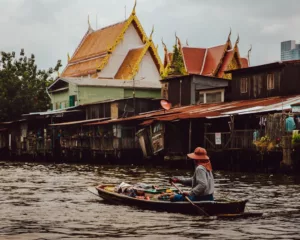
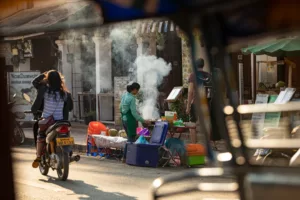
It’s 8:30 p.m. in Bangkok. The sky just dumped a 40-minute tropical downpour, the pavements are steaming, and Yaowarat Road is glowing in neon and puddle reflections. July through September is monsoon season — daily rain, lower hotel rates, fewer European tour groups — and still some of the best street food on the planet.
But if you’re backpacking on $40–50 a day, the real question is this: should you pay $45–65 for a guided street food tour, or grab a Grab bike and eat your way through Chinatown and Ratchada yourself?
Key Takeaways
- Guided street food tours in Bangkok cost $45–65 for 3–4 hours; DIY eating averages $12–20 for a full night feast.
- Monsoon rain typically hits 30–90 minutes in late afternoon; most food stalls reopen by 6–7 p.m.
- Yaowarat is 10–15 min walk from Wat Mangkon MRT; Ratchada Train Night Market is 5 min from Thailand Cultural Centre MRT.
- Tour value = local storytelling + 5–8 pre-selected dishes; DIY wins on flexibility and budget.
Bangkok in Monsoon: What You’re Actually Dealing With (July–September)
Monsoon doesn’t mean all-day rain. In July, Bangkok averages 150–180 mm of rainfall; August and September push closer to 300 mm. That usually translates to one heavy burst between 4–7 p.m., not a washout.
Street vendors adapt. Many Yaowarat stalls have plastic tarps and metal roofs. Compared to April (40°C heat index), July evenings hover around 28–30°C — humid, yes, but survivable.
Hotel prices drop 15–30% compared to December. A private room at Lub d Bangkok Siam is around $22–28 per night in July vs $35+ in peak winter. If you’re timing long-haul flights — which are often cheapest in late summer for Asia and South America — this is a strong contrarian travel window.
Option A: Guided Bangkok Street Food Tour (Pros, Cons, Real Costs)
The most popular tours run in Yaowarat (Chinatown). Companies like A Chef’s Tour and Bangkok Food Tours charge $45–65 per person for 3–4 hours, usually 6–8 tastings included.
Example: A Chef’s Tour “Bangkok Backstreets” costs around $59. It includes Michelin Bib Gourmand stalls, mango sticky rice, and boat noodles. Group size: 8–12 people.
What You’re Paying For
- Pre-selected high-quality vendors (no guesswork)
- English-speaking guide explaining ingredients and history
- Pre-ordering at busy stalls (skip 20–30 min queues)
- Dietary communication help (huge if you’re vegetarian)
In peak monsoon, the biggest advantage is logistics. If a storm hits mid-tour, your guide reroutes to covered alleys. Solo, you’re Googling under a plastic poncho.
Downsides for Backpackers
$59 is 1–2 nights in a hostel dorm (Mad Monkey Bangkok averages $12–18 in July). That’s real money.
You also lose spontaneity. If you fall in love with grilled pork skewers (moo ping) and want seconds for $1, you’re on a schedule.
Option B: DIY Eating in Yaowarat (Chinatown)
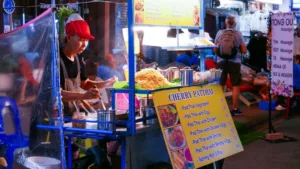
Yaowarat Road is 1 km of organized chaos. Get off at Wat Mangkon MRT (Blue Line), walk 10 minutes, and you’re in it.
Here’s what a realistic monsoon-night feast costs:
| Dish | Vendor Example | Price (USD) |
|---|---|---|
| Guay Jub (peppery pork noodle soup) | Nai Ek Roll Noodles | $2.50–3 |
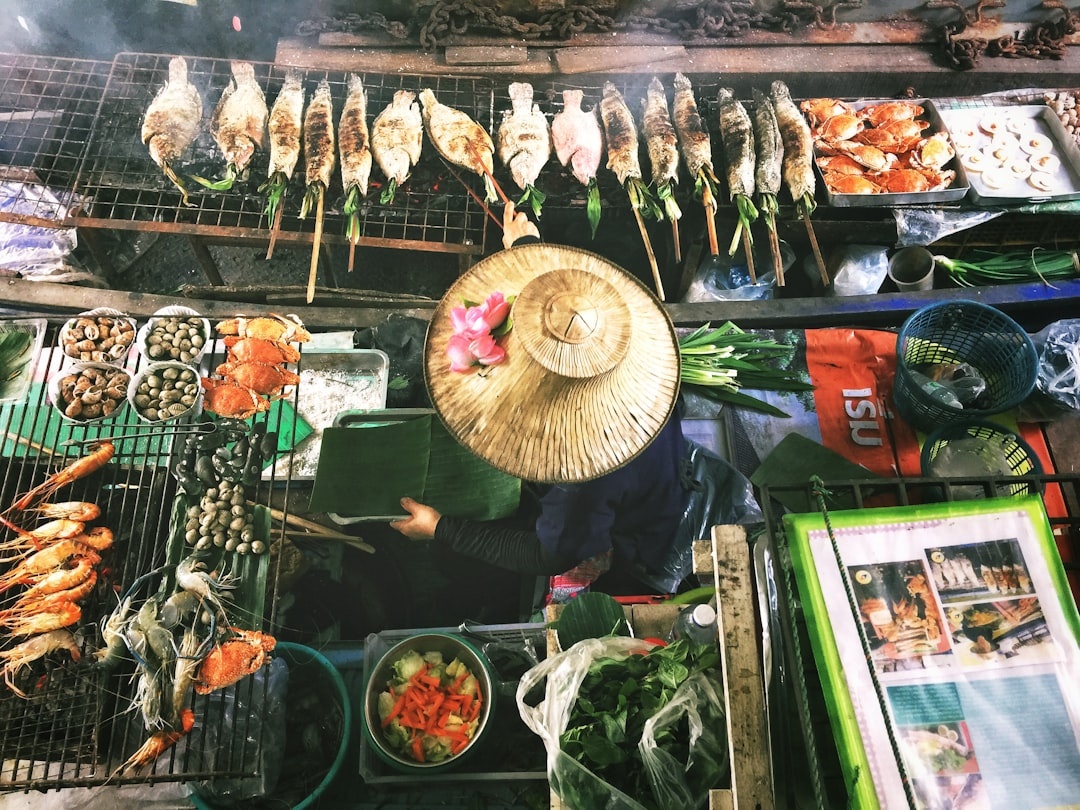
| Grilled seafood platter | T&K Seafood (green shirts) | $8–12 |
| Pad Thai (charcoal wok) | Thipsamai | $3–5 |
| Mango sticky rice | Kor Panich | $3 |
| Thai iced tea | Street cart | $0.75–1 |
Total if you sample everything generously: $17–22.
That’s roughly one-third the price of a tour, and you’ll probably eat more.
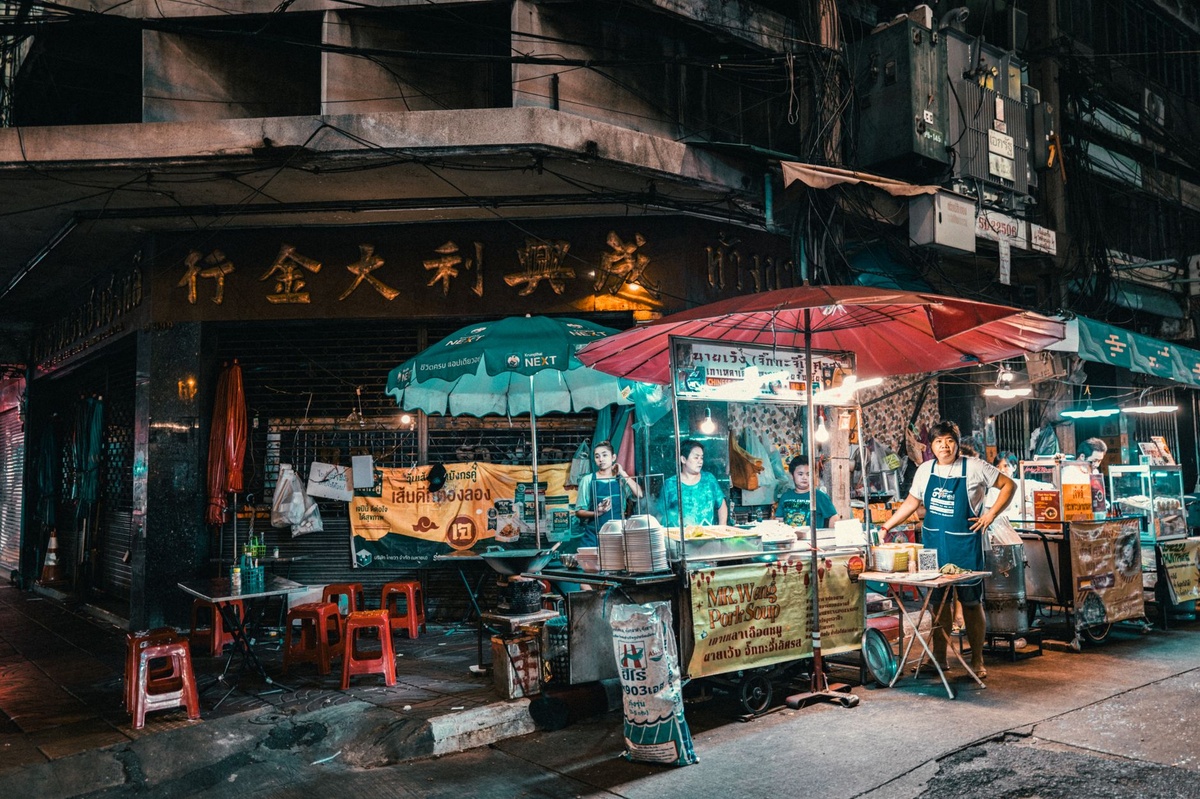
Rain Factor in Yaowarat
Between 5–6 p.m., some vendors pause during heavy rain. By 7 p.m., most are fully operational again. Streets flood lightly but drain fast.
Pro tip: aim for 7:30–9:30 p.m. Arrive too early and you’ll compete with local office workers; too late (after 10:30 p.m.) and popular items sell out.
Option C: DIY at Ratchada Train Night Market (Jodd Fairs Ratchada)
The original Ratchada Train Market closed, but Jodd Fairs Ratchada near Thailand Cultural Centre MRT carries the torch. Open daily 4 p.m.–midnight.
Compared to Yaowarat:
- Wider walkways (easier in rain)
- More seating under tents
- More Instagram food, fewer century-old recipes
Prices are similar or slightly higher than Chinatown. Giant river prawns: $10–15. Korean cheese corn dogs: $3–4. Fruit smoothies: $2.
Transport comparison from Sukhumvit (Asok):
- MRT: $1.20, 12 minutes direct
- Grab car in rain: $6–9, 25–40 minutes with traffic
During heavy storms, MRT wins every time.
Guided Tour vs DIY: Side-by-Side Comparison
| Factor | Guided Tour | DIY Yaowarat/Ratchada |
|---|---|---|
| Cost | $45–65 | $12–22 |
| Time | 3–4 hrs fixed | Flexible |
| Food Quality Control | Curated, consistent | Hit or miss |
| Rain Logistics | Handled by guide | You adapt |
| Cultural Context | High (stories, history) | Low unless you research |
If this were a European food festival, I’d lean guided — too many tourist traps and €12 water mistakes (see our breakdown of rookie food festival errors to avoid). Bangkok street food is different: prices are transparent, turnover is fast, and Google Maps reviews are surprisingly reliable.
Tech Tools That Make DIY Smarter (and Safer in Monsoon)
If you’re skipping the tour, your phone becomes your guide.
- Google Maps: Filter by 4.3+ stars and 500+ reviews for consistency.
- Grab: Bike rides across central Bangkok cost $1–3; faster than taxis in rain.
- Google Translate (camera mode): Essential for Thai-only menus.
- Wise or Revolut: Avoid 220 THB (~$6) ATM fees by withdrawing larger sums once.
Unlike road-tripping Europe — where apps like the new AI-powered Waze features can reroute you around summer jams — Bangkok’s advantage is density. Everything is within 1–2 km walking distance in food districts.
When a Guided Tour Is Actually Worth It
I’d pay for a tour if:
- You have one night in Bangkok.
- You’re nervous about food hygiene.
- You’re traveling solo and want instant social energy.
- You want deeper culinary history (Teochew Chinese influence, spice trade routes).
During monsoon, tours can also feel less chaotic. Fewer peak-season crowds (December–February sees tour groups double in size).
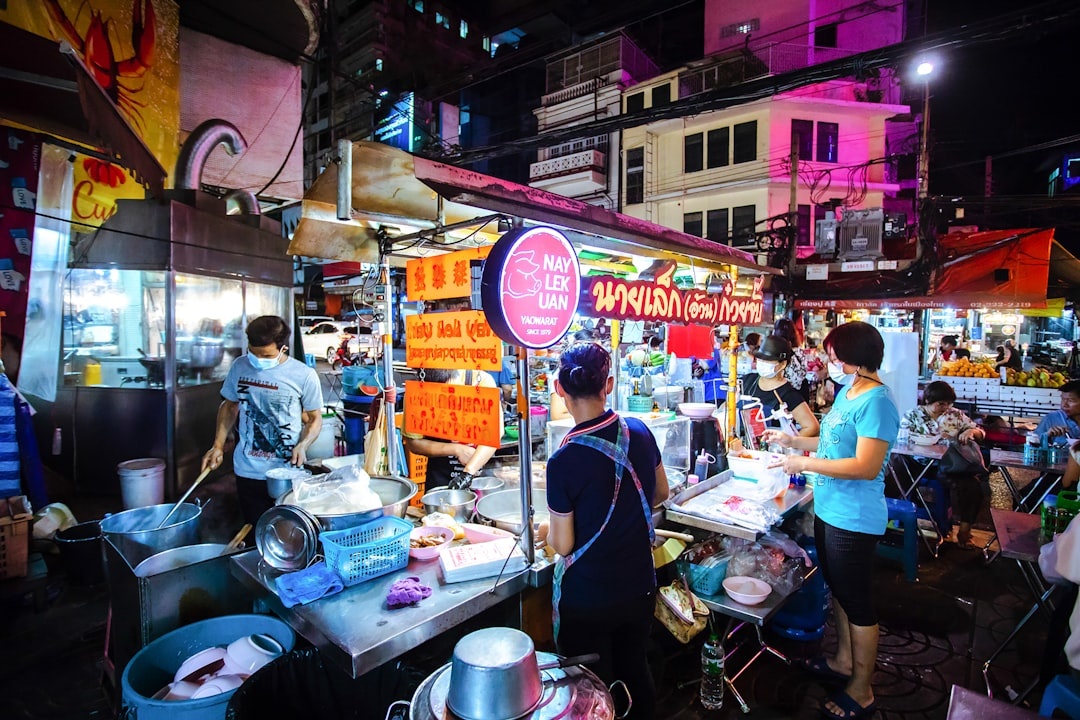
But if you’re here 3+ nights, DIY one evening and spend the $50 on a Thai cooking class instead (Baipai Thai Cooking School is around $70 for half-day — better long-term value).
Backpacker Budget Breakdown (3 Nights in Bangkok, July)
| Item | Cost (USD) |
|---|---|
| Hostel dorm (3 nights @ $15) | $45 |
| MRT & transport | $10 |
| Street food (DIY 2 nights) | $35 |
| 1 guided food tour | $59 |
| Total | $149 |
Skip the tour and your total drops to ~$90. That’s a 40% savings — enough for a flight to Chiang Mai (often $25–40 one-way on AirAsia if booked early).
So… Is It Worth It in Peak Monsoon?
For strict budget backpackers: no. DIY wins on value, flexibility, and sheer volume of food per dollar.
For short-stay travelers or first-timers overwhelmed by Bangkok’s scale: yes, especially in July when crowds are lighter and guides have more time per guest.
Monsoon isn’t the enemy here. In fact, cooler evenings and lower accommodation prices make July–September one of the smartest times to eat your way through Bangkok — if you don’t mind carrying a $2 poncho.
If you’ve got three nights, do this: DIY in Yaowarat one night, Ratchada the next, and only book a tour if you feel you missed context. Spend the savings on more mango sticky rice.
Planning a wider Asia trip this summer? Lock in flights early, embrace shoulder-season rain, and use Bangkok as your affordable food capital stopover.
Hungry already? Screenshot this, pack a light rain jacket, and head to Wat Mangkon MRT after 7 p.m. Bangkok does the rest.
Planning your monsoon stay? Compare hotels in Bangkok and lock in a great rate before you hit Yaowarat and Ratchada.
Frequently Asked Questions
How much does a Bangkok street food tour cost in 2026?
Most reputable tours cost $45–65 per person for 3–4 hours and include 6–8 tastings. Private tours can exceed $90 per person.
Is Bangkok street food safe during monsoon season?
Yes, if you choose busy stalls with high turnover. Rain doesn’t affect food safety as much as low customer volume — look for lines and fresh cooking.
What’s cheaper: Yaowarat or Ratchada Night Market?
Yaowarat is slightly cheaper for traditional dishes ($2–5 plates), while Ratchada/Jodd Fairs leans toward trendy items at $3–10. Overall, Chinatown offers better value.
What time is best for street food in Bangkok during rainy season?
Arrive around 7:30–9:30 p.m. after typical afternoon storms pass. Many stalls close by 11 p.m., and popular items sell out earlier.

About the Author: Tomáš Bzirský
Founder and editor of Distratech. Based in the Czech Republic, travelling regularly from Central Europe. Writes practical travel guides and travel-tech comparisons (eSIM, apps, airports) in six languages.