


At the end of the year, we fulfilled one of our diving dreams – a week-long safari around the central atolls of the Maldives. We chose the company Blue Force and their vessel Blue Force 3. And it was quite a ride.
If you’re wondering whether to go to a resort or choose a liveaboard, here’s my honest experience. Resorts are nice, but you spend a week on an island with all-inclusive service. If you’re lucky, the island might be more than 200×200 meters, so you can at least take a short walk. You can also do a few dives, since there’s usually a dive center, but the price tag is noticeably higher 🙂
Arrive a Day Earlier? Yes, But…
I recommend arriving with some time to spare, especially if your flight lands late at night. It’s not mandatory, but it gives you peace of mind—particularly in case of flight delays. The boat usually anchors nearby, and the crew will transfer you onboard by dinghy. The same applies for departure.
Don’t expect too much from the main island. It’s usually enough to book cheaper accommodation since boarding starts at 11 a.m. It’s quite crowded, and unless you plan to stay a few extra days in a nice resort, there’s no real reason to linger. The Maldives are about the ocean—not the cities. Surprisingly, there are pleasant cafés on the main island, such as Bianco Coffee & Eatery. If you prefer a nicer area to stay, consider Hulhumalé.
What Life on Board Looks Like
There are usually 20–25 divers on board. Within a few days, you naturally fall into a rhythm:
Wake up – briefing – dive – eat – chill – dive – eat – sleep.
All important activities are announced by the ship’s bell. After two days, you respond to it almost Pavlovian-style—when it rings, you know it’s time to eat, dive, or attend an evening activity 🙂 Fortunately, you don’t start drooling.
Meals are all-inclusive (breakfast, lunch, snacks, dinner), with drinks other than water at an extra charge. Reality? After three dives a day, you’ll have maybe one beer and go straight to bed—because wake-up is at 6:30 a.m., sometimes even earlier on certain boats.
Accommodation and service were of very good quality. The crew and dive guides were professional yet friendly.
How Many Dives and What Level?
You’ll typically complete around 18 dives in a week. That’s excellent value for approximately 40–50,000 CZK (plus tanks and optional courses).
However, it’s important to have:
-
Advanced Open Water
-
Nitrox certification
-
Ideally at least 40–50 logged dives
Some dive sites feature strong currents and depths beyond typical recreational comfort levels. We completed our Advanced and Nitrox certifications during the trip—it can be done directly on board. Nitrox is especially useful due to lower nitrogen absorption and reduced fatigue after multiple dives.
What Will You See Underwater?
The highlight? Big marine life.
-
Manta rays at cleaning stations
-
Night manta looping while feeding on plankton under the boat lights
-
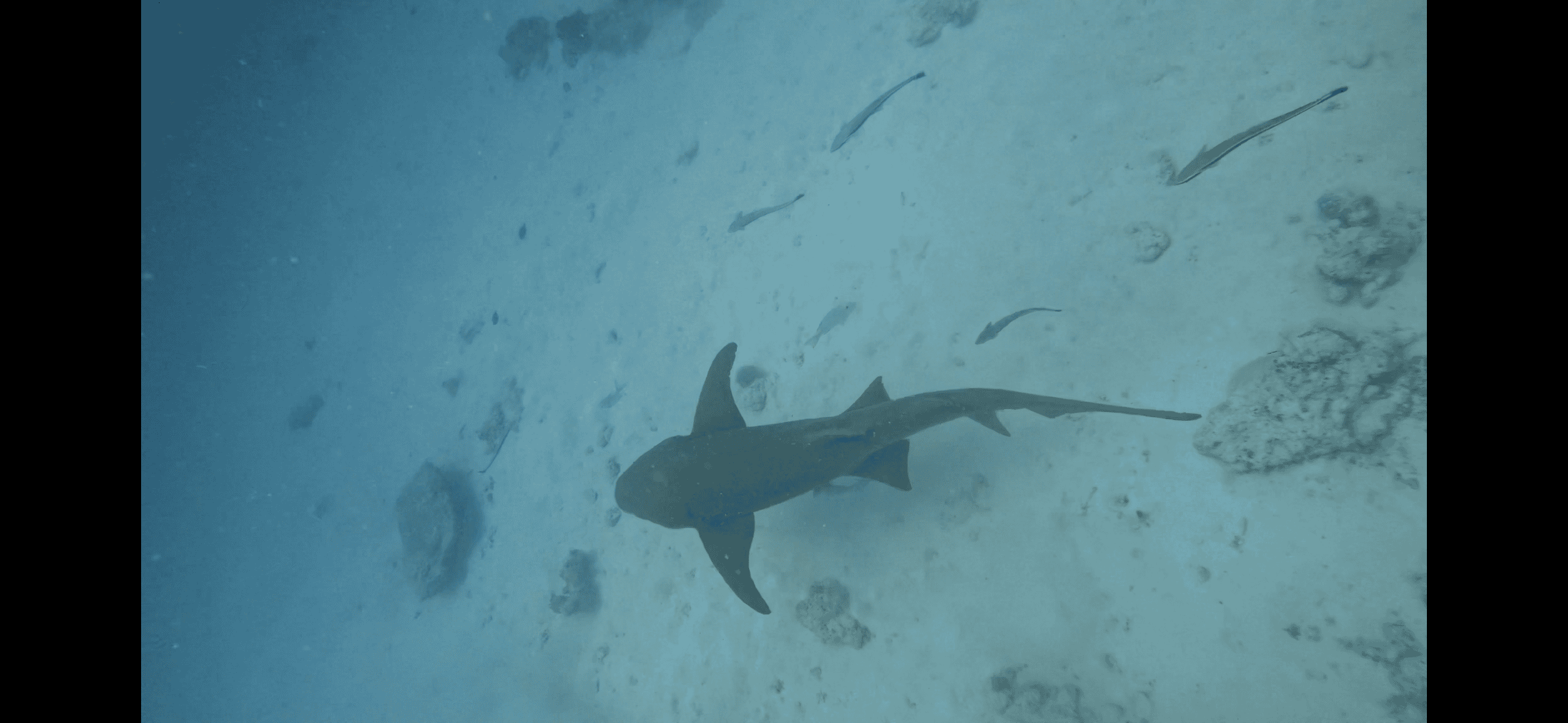
Sharks – nurse, silver tip, reef sharks
-
Turtles, moray eels, Napoleon wrasse, triggerfish
-
Dolphins around the boat at sunset
In the evening, lights at the stern attract plankton. Plankton attracts fish—and fish attract manta rays. You descend to about ten meters and wait as a several-meter-wide manta performs a perfect looping ballet above your head.
A powerful experience.
If you’re into macro photography, you’ll also find plenty to enjoy—tiny shrimp, microorganisms, and small fish only a few millimeters in size. Everyone finds their thing.
What About the Corals?
Let’s be honest. If you’re looking for pristine coral gardens like in Egypt or Raja Ampat, the Maldives are not quite at that level. Some reefs are damaged, and coral bleaching is visible in places.
That said, the Maldives are actively working on coral restoration and planting fast-growing species. You’ll still find beautiful reefs and thrilling drift dives where you hook into the reef and watch sharks cruise by.
Wetsuit? Yes.
The water is warm, but the currents are strong. And when you dive three times a day, your body cools down. I always bring my wetsuit—it’s better to have it and not need it than the other way around.
Putting it on three times a day can be annoying, but better to be prepared—especially after my Raja Ampat experience, where I spent a week recovering from an infection 🙂
Is It Worth It?
Absolutely.
If you love big marine animals, drift dives, and an intense week where your world narrows down to “eat – dive – sleep,” you’ll love it.
Next stop? Galápagos. 🦈